
Last updated November 2, 2026
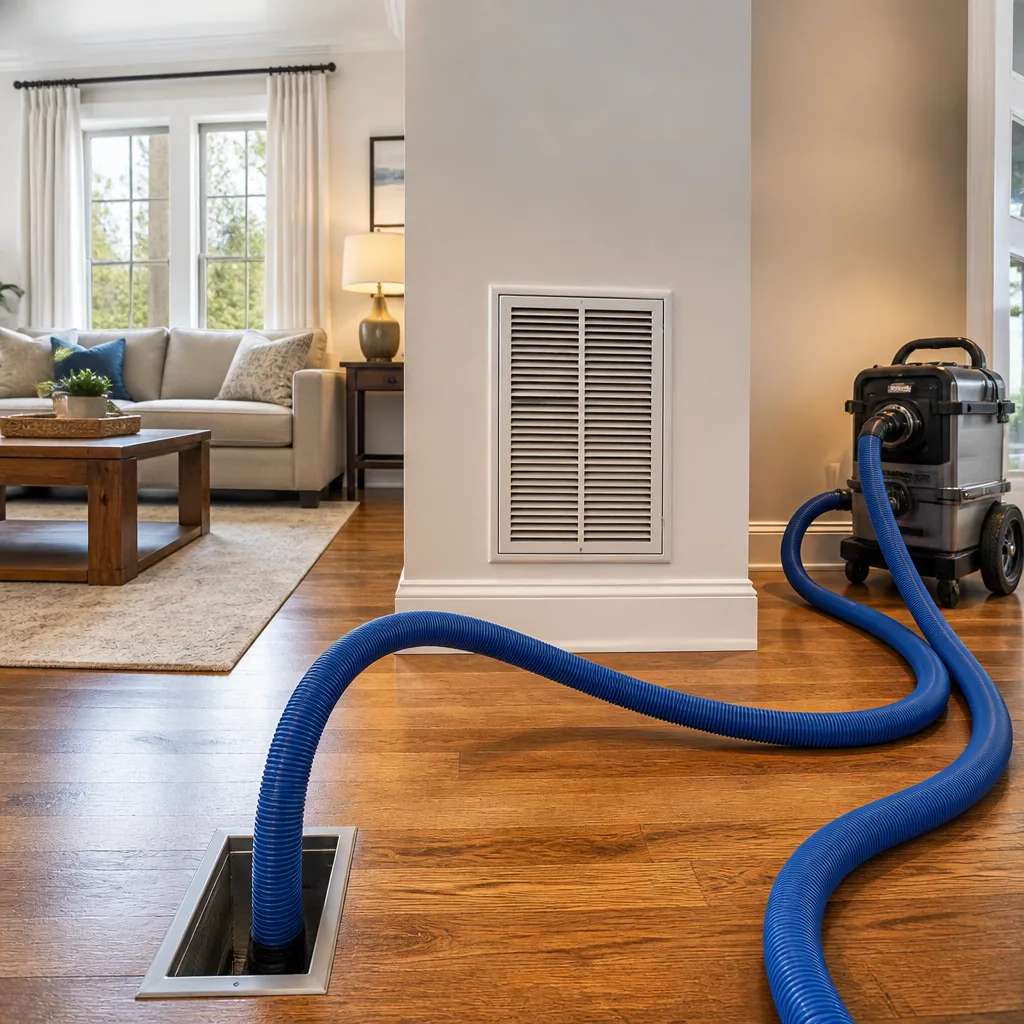 Whole-home duct cleaning
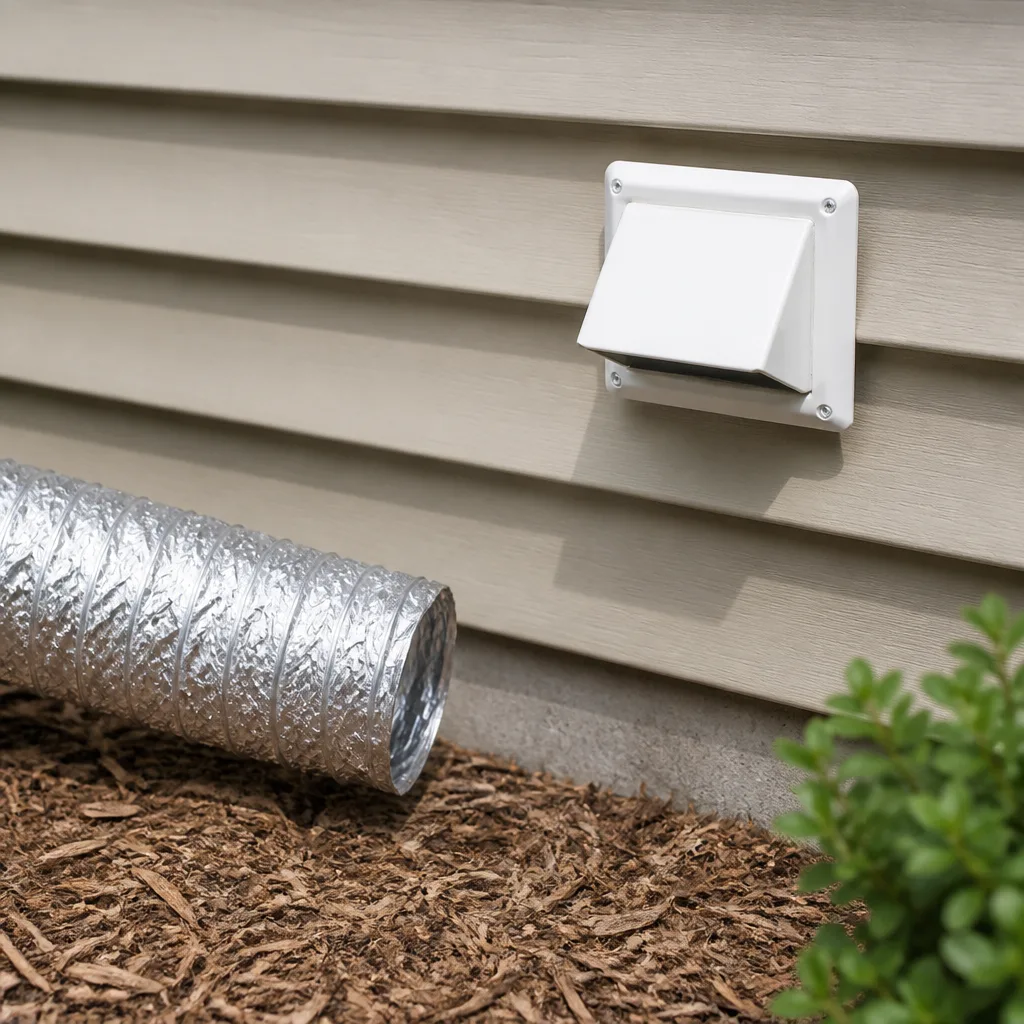 Dryer vent cleaning
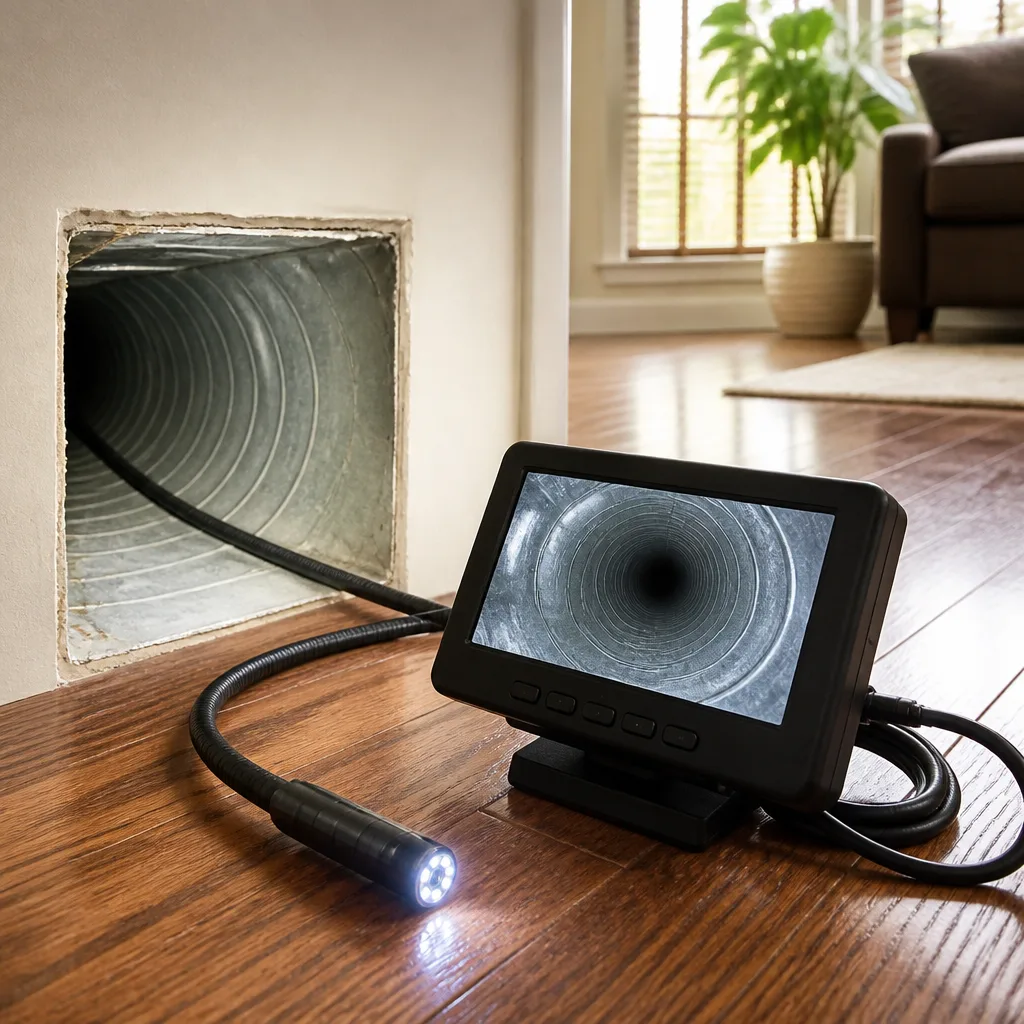 Camera inspection
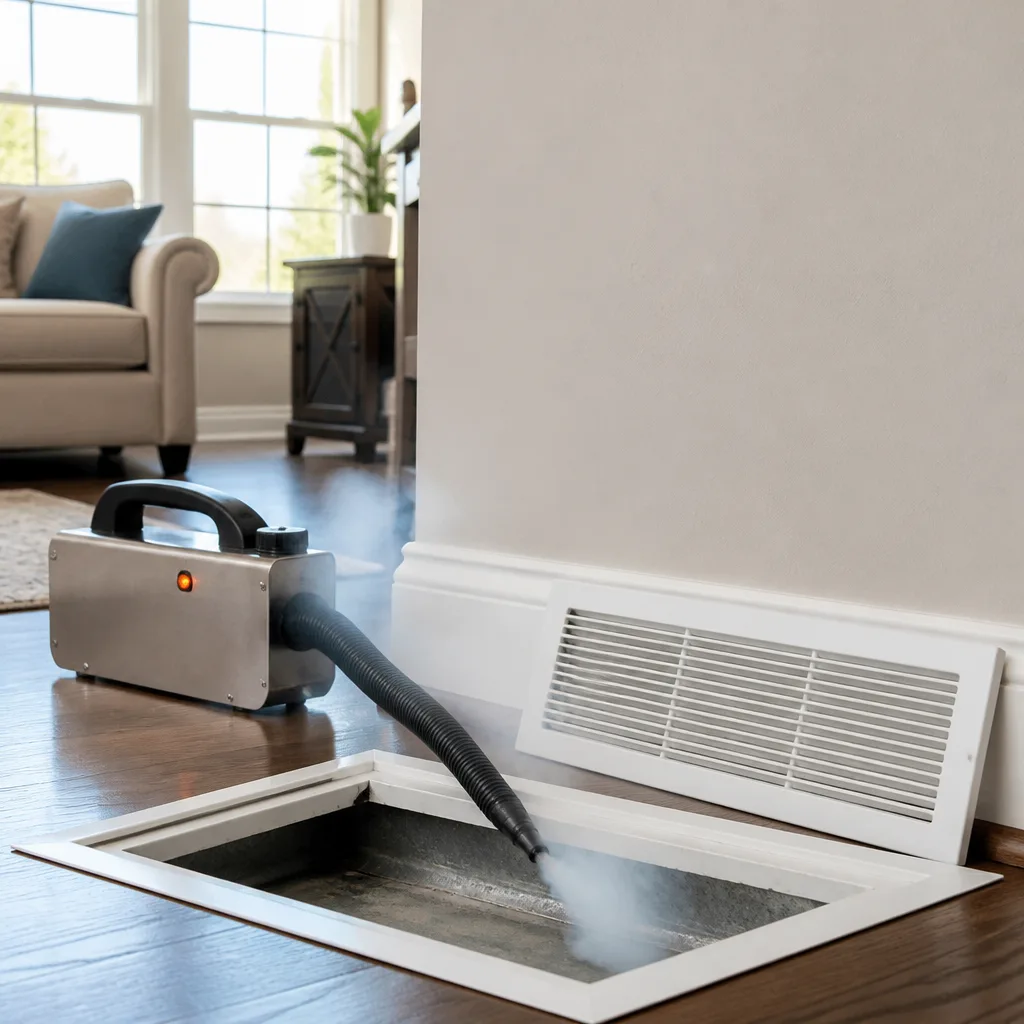 Sanitizing & deodorizing
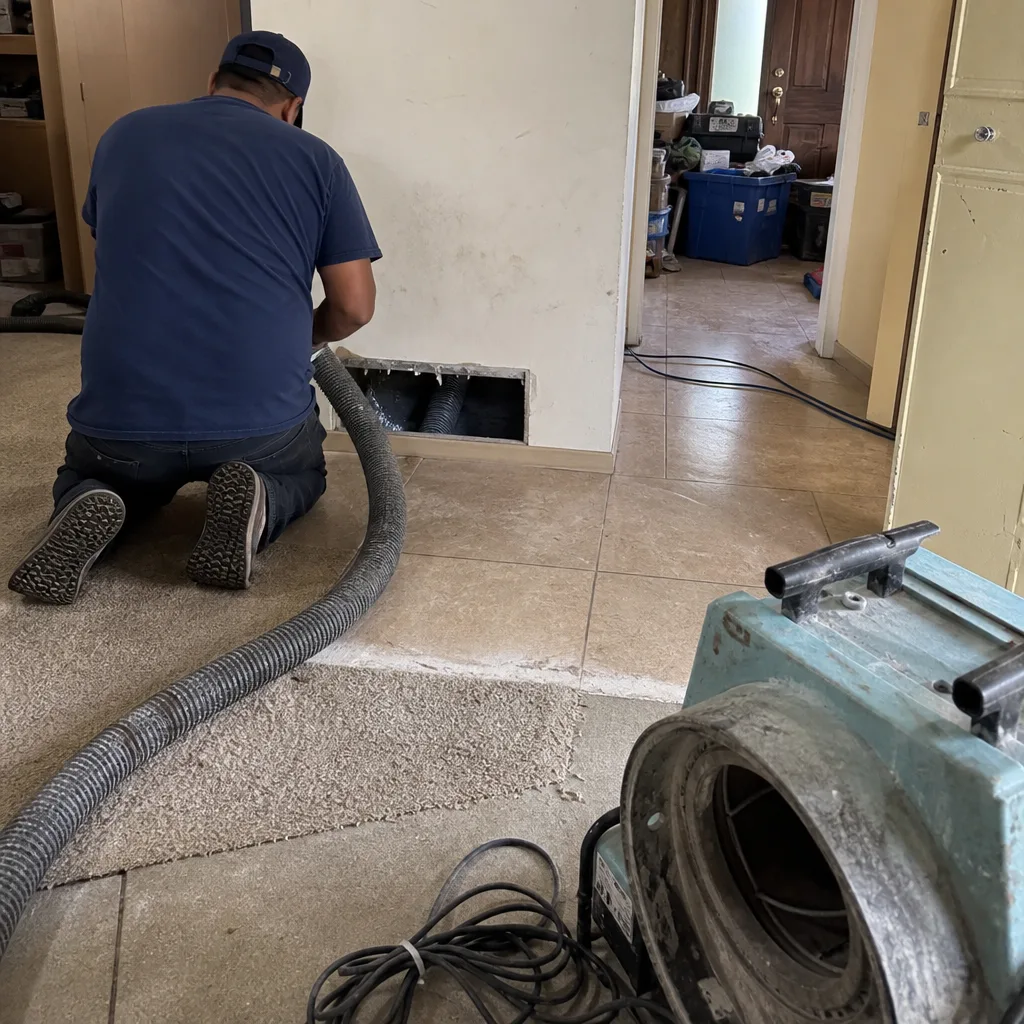
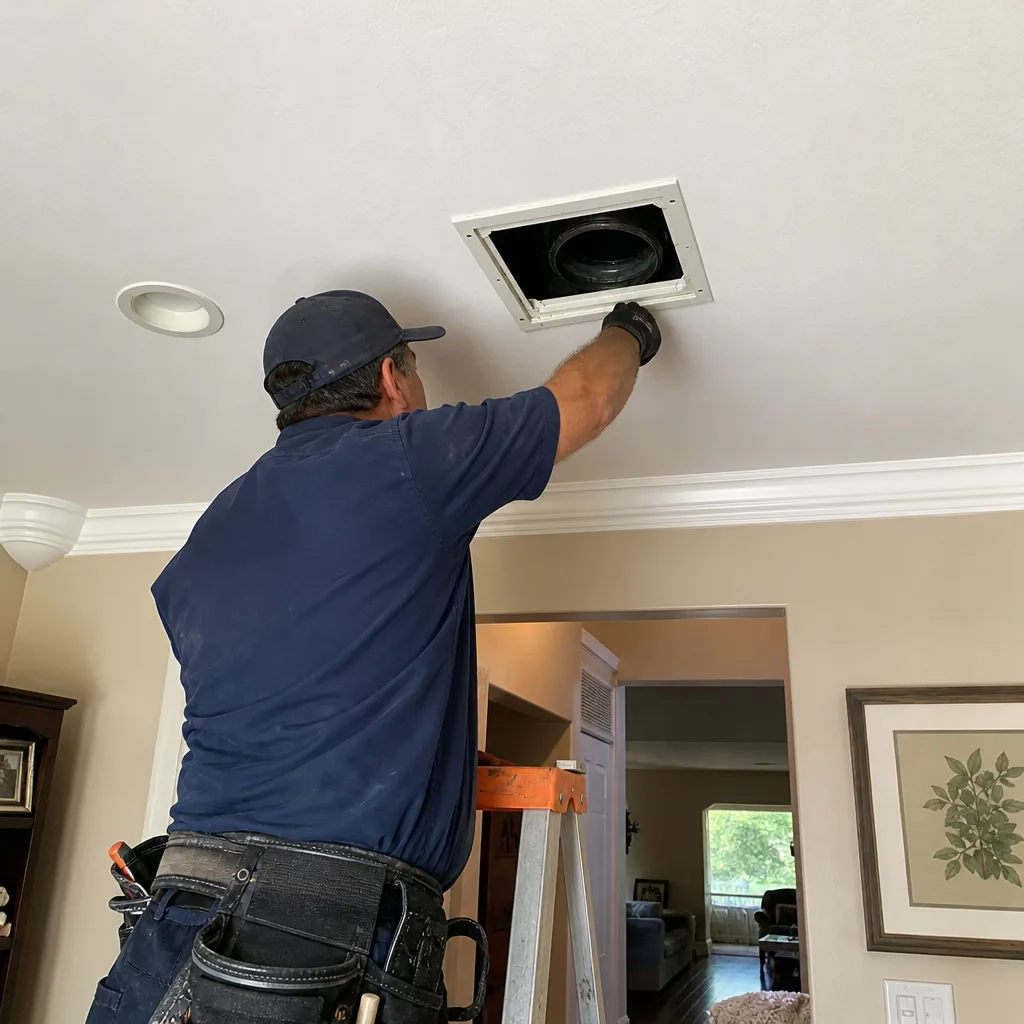
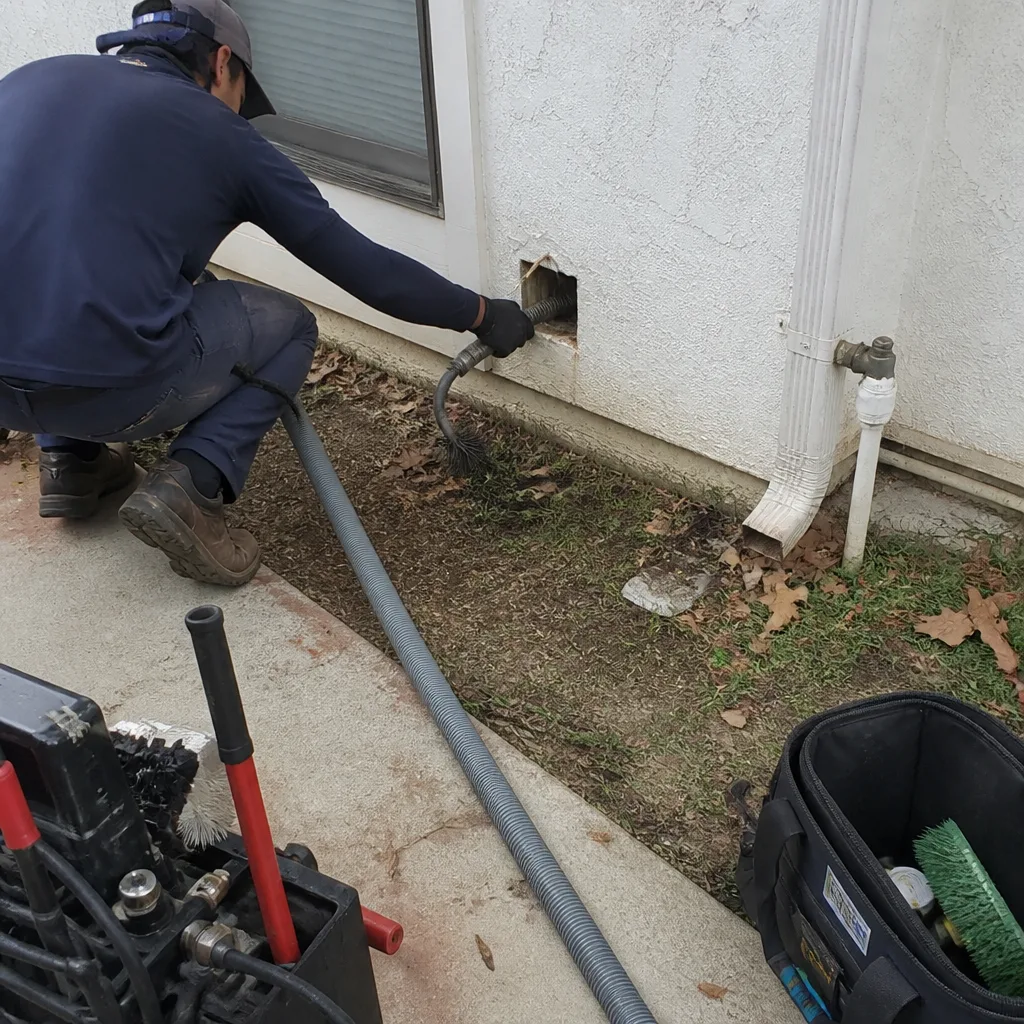
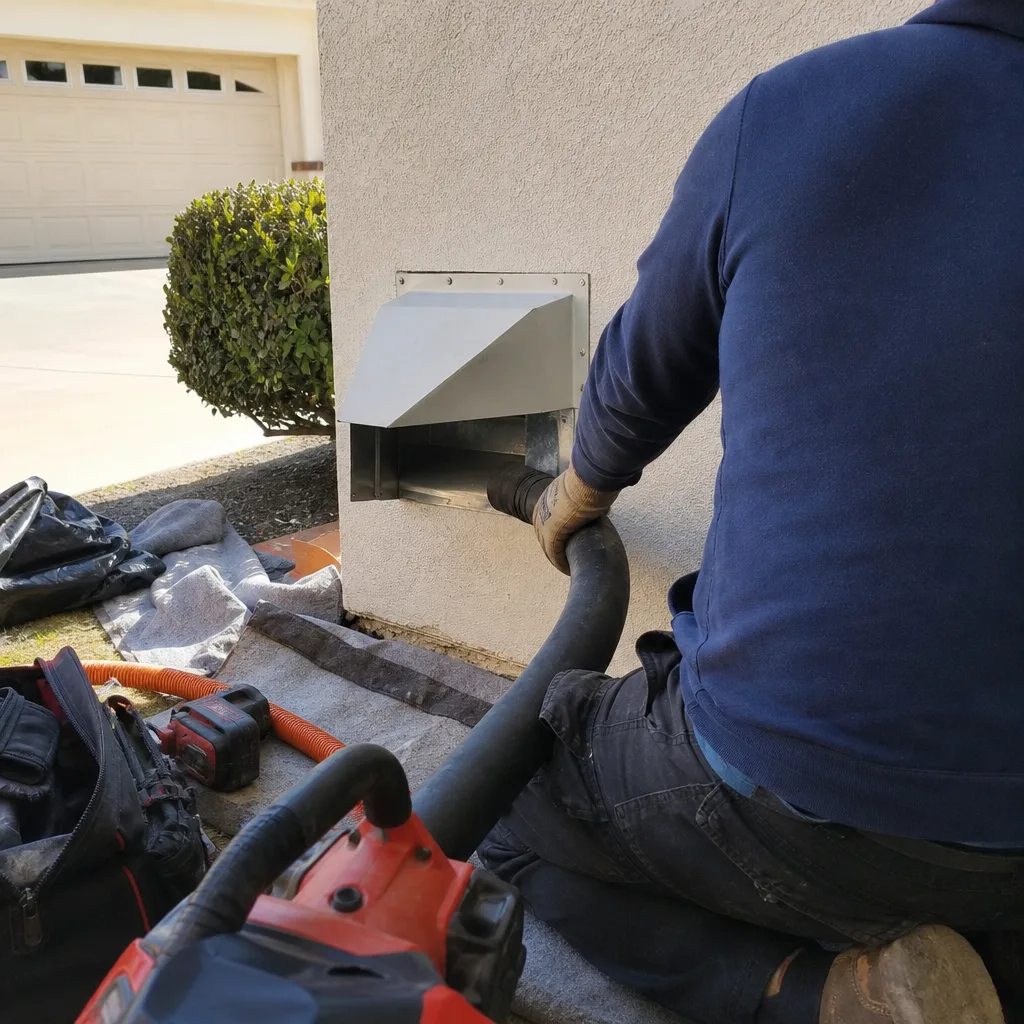
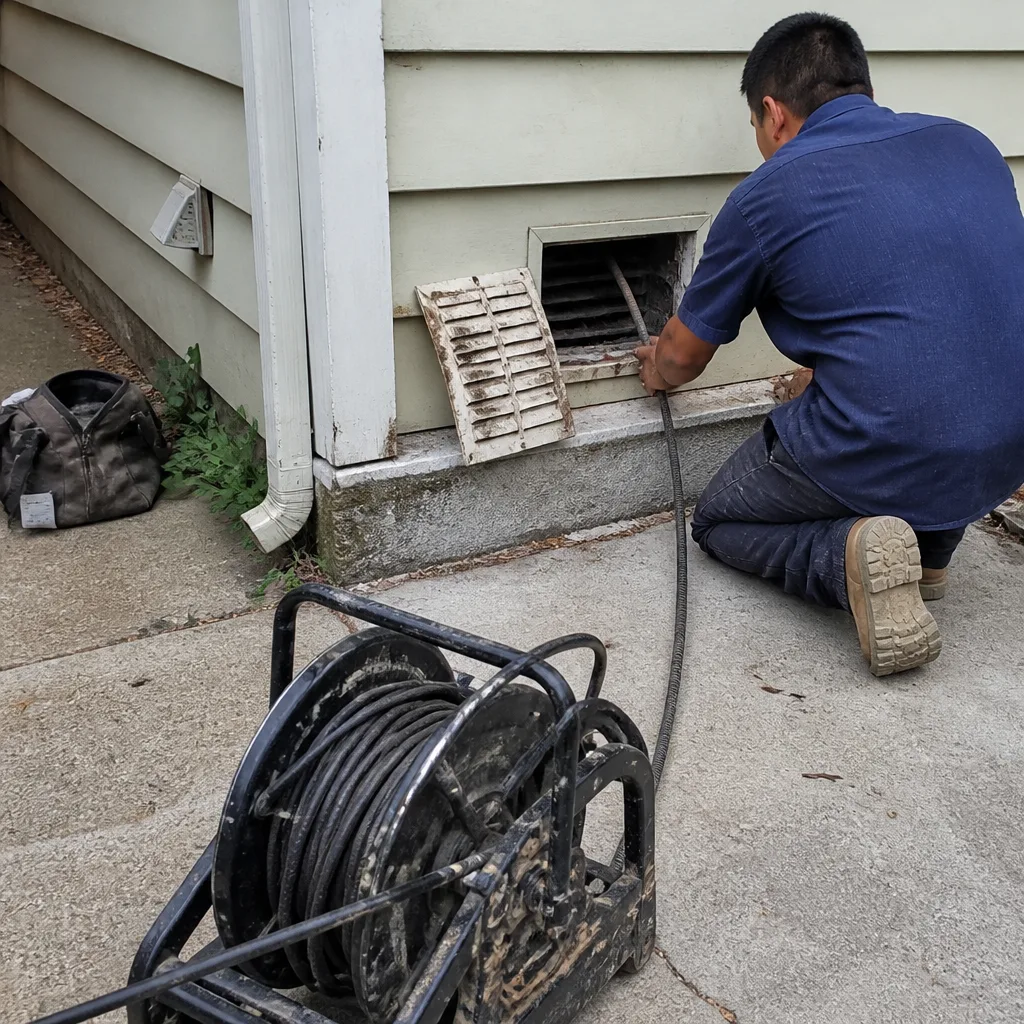
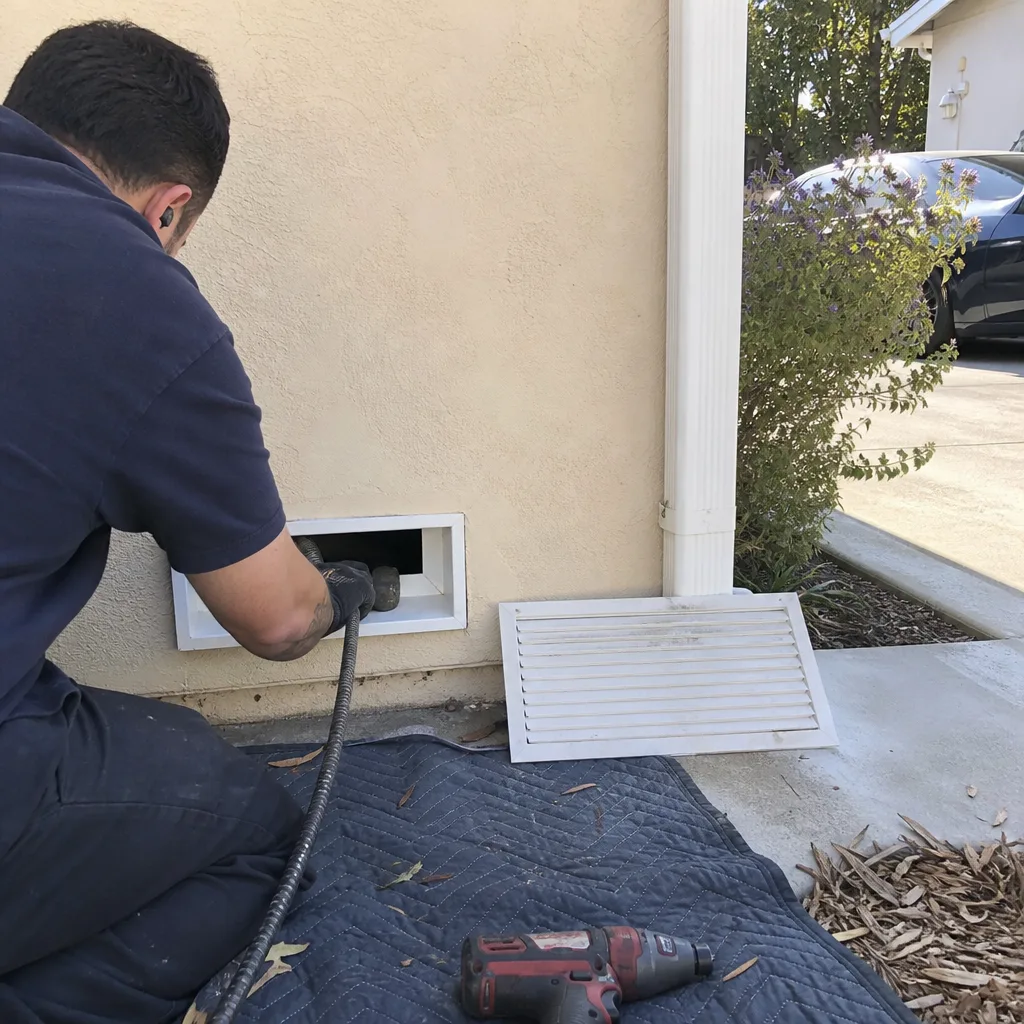
Whole-system duct and dryer vent check with before-and-after photos - you see exactly what came out of your vents
That "$99 whole-house special" is a bait ad - the real number appears once they are in your hallway, or the "clean" is a shop-vac at the register. We photograph the inside of your ducts before and after instead.
Air Duct Cleaning Troubleshooting: Common Problems and How to Fix Them
A musty smell kicks on with the AC. Dust reappears on furniture two days after you wipe it down. One bedroom never quite cools while the hallway feels like a meat locker. In Ventura, where ocean air pushes humidity through coastal neighborhoods and inland heat cycles run HVAC systems hard from June through October, homeowners face a frustrating question: is this a dirty duct problem, or something else entirely? Here’s the uncomfortable truth most troubleshooting guides won’t tell you: many symptoms that look like dirty ducts are actually failed components elsewhere in your HVAC system, and some symptoms people dismiss are genuinely caused by duct contamination. This guide gives you a diagnostic framework to tell the difference before you spend money on the wrong fix or ignore a real indoor air quality problem.
Styles & brands we work with
- Whole-home duct cleaning
- Dryer vent cleaning
- Camera inspection
- Sanitizing & deodorizing
Quick Answer
Air duct cleaning problems fall into two buckets: symptoms caused by dirty ducts (persistent dust at registers despite clean filters, visible debris inside ductwork, musty odor that persists after coil cleaning) and symptoms caused by other HVAC failures (wet evaporator coils, cracked drain pans, leaky duct seams, failed filtration). Before scheduling duct cleaning in Ventura, verify whether the symptom originates in the ducts themselves or upstream in the air handler, plenum, or return path. The wrong diagnosis means either paying for a cleaning that doesn’t solve the problem or ignoring contaminated ducts that keep recirculating particulates through your home.
Table of Contents
- Symptom-by-Symptom Diagnosis: Duct Problem or HVAC Failure?
- Musty Odors: When It’s the Ducts and When It’s the Coil
- Uneven Airflow and Hot Spots: Leakage or Blockage?
- Visible Dust at Registers: Recirculation or Contamination?
- Allergy Symptoms That Don’t Improve: The Filtration Connection
- Signs Your Previous Duct Cleaning Was Superficial
- Why Improper Duct Cleaning Makes Air Quality Worse
- Duct Leakage: The Overlooked Contamination Pathway
- When Duct Cleaning Is Not the Right Call
- Common Mistakes to Avoid
- When to Call a Professional
- Frequently Asked Questions
- The Bottom Line
Symptom-by-Symptom Diagnosis: Duct Problem or HVAC Failure?
Every HVAC system is a loop. Air enters through return grilles, passes through the filter, gets conditioned at the coil, and travels through supply ducts to each room. A problem anywhere in that loop can show up as a symptom that looks like a duct issue. Our team at Air Duct Cleaning Ventura home walks into homes every week where the homeowner has self-diagnosed dirty ducts, but the actual failure is a collapsed flex run in the attic, a blower wheel caked with years of accumulated dust, or a return plenum pulling unfiltered air from a crawlspace. Here’s the diagnostic breakdown by symptom:
- Musty odor at startup, fades after 10-15 minutes: Points to moisture on the evaporator coil or in the drain pan. Not a duct problem. Call an HVAC technician.
- Musty odor constant, doesn’t fade, stronger at certain registers: More likely duct contamination, especially if you see visible microbial growth or rodent activity inside the ductwork.
- Dust accumulating within 48 hours of cleaning: Duct leakage pulling attic or crawlspace particulates into the system, or a failed filter rack allowing bypass. Requires duct inspection, not necessarily cleaning.
- One or two rooms consistently warmer: Damper issue, collapsed flex duct, or a disconnected branch run. Duct cleaning won’t fix airflow path problems.
- Allergy symptoms worse at home, better away: Consider duct contamination, but also evaluate filtration quality. A 1-inch fiberglass filter catches almost nothing.
- Visible dust tufts at supply registers: Duct interior contamination or deteriorating duct liner. This is a genuine duct cleaning candidate.
Ventura’s coastal salt air accelerates corrosion on exterior AC components, while inland neighborhoods like East Ventura and Saticoy see dust intrusion from dry hillside conditions. Your symptom pattern ought to be read in that context: a home five blocks from the ocean with musty startup odor is more likely dealing with coil moisture than a home in the citrus belt with dry dust accumulation at every register.
Musty Odors: When It’s the Ducts and When It’s the Coil
The single most misdiagnosed HVAC symptom in Ventura is the musty startup smell. Here’s what’s actually happening most of the time: your evaporator coil sits in a dark, cool, damp environment. When the AC runs, condensation forms on the coil. When it shuts off, that moisture sits there. Over time, if the drain pan doesn’t fully empty or the coil never fully dries, microbial growth develops on the coil surface itself. The smell you get when the system starts up is that coil growth, not the ducts.
How to tell the difference without expensive testing:
- Time the smell. A coil odor fades within 10-15 minutes of runtime as the coil re-wets and the air movement dissipates the odor. Duct contamination odor tends to be more constant and can intensify at specific supply registers.
- Check the filter location. If you can access your air handler, shine a flashlight at the coil. Visible dark spots or slime on coil fins = coil problem. Clean ducts will not fix this.
- Sniff different rooms. If the odor is strongest in one room, that branch duct is a stronger suspect. If you smell it at every register equally, the source is upstream, at the air handler or return plenum.
- Look at the drain pan. A cracked or rusted drain pan holds standing water. So does a pan with an incorrect slope. Standing water smells musty. The fix is a pan replacement or slope correction, not duct cleaning.
When odor is genuinely coming from the ducts, the contamination is usually organic material that shouldn’t be there: rodent nesting, dead pests, or moisture intrusion from a roof leak that ran down into a duct run. That’s an Air Duct Cleaning in Ventura scenario, often paired with duct inspection and possible repair. But the cleaning has to address the source of the organic material, or the smell returns in weeks.
Uneven Airflow and Hot Spots: Leakage or Blockage?
A system delivering uneven airflow is usually suffering from one of three problems: duct leakage, a disconnected or collapsed branch run, or a damper imbalance. None of these is fixed by cleaning the ducts. Here’s the breakdown:
Duct leakage is the silent energy and air quality thief in most Ventura homes. The Department of Energy estimates typical duct systems lose 20-30% of conditioned air through gaps at seams, connections, and register boxes. In practice, that means the air you paid to cool or heat is ending up in your attic or crawlspace. Worse, when the system runs, those leaks create negative or positive pressure differentials that pull unfiltered air from the attic into the return side. Attic insulation fibers, dust, and whatever else is up there enters your airstream through those gaps.
Collapsed or kinked flex duct is common in Ventura attics, where temperatures can exceed 130°F in August. Flex duct sags, kinks, or gets crushed under stored boxes or other duct runs. The result is a room that gets half the airflow it should.
Damper imbalance happens when the balancing dampers at the plenum get moved, often during renovations or after prior service work. One small damper adjustment can redirect 30% of airflow away from one room and into another.
The diagnostic sequence we recommend:
- Compare airflow volume at registers by feel. Use a piece of tissue paper at each supply register. Mark which rooms show weak airflow.
- Check if weak registers are on the same trunk line. If yes, suspect a collapsed branch or damper issue.
- Inspect accessible ductwork in the attic for visible sag, kink, or disconnection. A disconnected flex run is often visible within minutes if you can access the attic.
- If all registers are weak, suspect a return-side problem: clogged filter, collapsed return duct, or an undersized return plenum.
If you find a disconnected or damaged duct, that’s an Air Duct Repair in Ventura situation. Cleaning a disconnected duct system is pointless until the airflow path is restored.
Visible Dust at Registers: Recirculation or Contamination?
Dust tufts clinging to supply register grilles, gray streaks forming on walls near registers, or a layer of fine dust on surfaces within a day or two of cleaning: these are the symptoms homeowners most commonly associate with dirty ducts. Sometimes they’re right. Sometimes the ducts are fine and the real problem is the filter setup, duct leakage, or a blower compartment pulling dust from an unfinished garage or crawlspace.
Here’s the diagnostic key: if your system has a properly installed, well-sealed filter that stays clean between changes and you still see dust accumulation at registers, the ducts themselves are likely shedding or carrying debris. If your filter is cheap, poorly fitted, or bypasses air around the edges, the dust is entering at the filter rack and the ducts are just transporting it.
Ventura homes built before the 1990s often have filter racks retrofitted into existing ductwork, which means gaps around the filter frame. Those gaps allow unfiltered air to bypass the filter entirely. In new construction, filter racks are usually properly sized and sealed, but the ducts themselves often contain construction debris: drywall dust, sawdust, and insulation scraps that were never cleaned out before move-in. We see this regularly in newer Ventura subdivisions where the HVAC system ran during the final construction phase and pulled dust into the return plenum before the owners ever moved in.
A practical test: remove a supply register in a dusty room and run your finger along the inside of the duct for six inches past the register box. If it comes back covered in dust that looks like it’s been accumulating for years, the ducts need cleaning. If the duct interior is relatively clean but dust is still appearing at the register, the contamination is entering upstream, and duct cleaning alone won’t solve it.
Allergy Symptoms That Don’t Improve: The Filtration Connection
Here’s the part most troubleshooting content skips: your ducts are just the transportation network. The quality of air reaching your rooms depends as much on the filter as on the cleanliness of the ductwork. We’ve seen Ventura homeowners spend money on duct cleaning and then keep wheezing because their 1-inch fiberglass filter, the kind that costs 99 cents, catches less than 10% of fine particulates. The ducts were clean. The air wasn’t.
Fine particulate matter, the kind that triggers allergy and asthma symptoms, passes through standard filters and recirculates continuously. A HEPA-rated filter or a high-MERV media filter changes that equation dramatically. Honeywell and Aprilaire make media filtration systems that integrate with existing HVAC equipment and capture particles down to the 1-micron range. Adding a quality filtration component after a duct cleaning extends the benefit of the cleaning by preventing re-contamination from outdoor air and household sources.
The sequence that actually improves indoor air quality for allergy sufferers in Ventura households:
- Clean the ducts if they’re genuinely contaminated. This removes the existing particulate load.
- Upgrade filtration to a MERV 11-13 media filter or a HEPA-rated system. This prevents re-accumulation.
- Seal duct leaks so the system isn’t pulling unfiltered air from the attic or crawlspace.
- Address any moisture sources feeding microbial growth.
Skip any of those steps and you’ll be disappointed with the result. A duct cleaning alone in a leaky system with poor filtration is a temporary improvement, not a fix.
Signs Your Previous Duct Cleaning Was Superficial
If you paid for duct cleaning in the past and symptoms returned within months, consider the possibility that the cleaning itself was incomplete. Not all duct cleaning is the same, and the difference comes down to equipment and method. Here are the signs we look for when inspecting a system that was supposedly cleaned:
- Dust accumulation in the duct interior within 6-12 months of the cleaning. A proper contact cleaning removes the debris layer from duct walls. If dust is already building up again, the previous job likely used negative air alone, without mechanical agitation. Vacuum-only cleaning pulls loose debris but leaves the adhered particulate layer in place.
- Flex duct runs disconnected or not properly reconnected at the register boot. Sloppy technicians sometimes pull flex runs loose and don’t reattach them properly. That creates an immediate airflow loss and a contamination pathway.
- Access panels not fully resealed. Any technician doing a proper job cuts access panels at strategic points and reseals them with mastic, foil tape, or mechanical fasteners. If panels are hanging open or sealed with duct tape that’s peeling, air is leaking.
- Insulation disturbed at register boxes. Sloppy work knocks attic insulation into the register boot, which then gets pulled into the airstream. You’ll see insulation fibers at the supply register.
- No before-and-after documentation. A serious cleaning company can show you photos or video of the duct interior before and after the job. If a previous contractor offered no documentation, you can’t verify what was actually done.
The equipment difference matters. We use Rotobrush contact-cleaning systems, which physically agitate the debris layer from duct walls while the vacuum extracts it. That’s different from a shop vac connected to a duct opening, which is what some discount operations use. The agitation step is what separates a cosmetic pass from an actual cleaning. Nikro HEPA-rated vacuums on the extraction side ensure the particulates are captured, not redistributed into the home. These are commercial-grade tools, the same class used in remediation projects where air quality standards are specified in the contract.
If you’re evaluating whether a previous duct cleaning in Ventura was done right, ask for the documentation. If it doesn’t exist, the job probably wasn’t done right.
Why Improper Duct Cleaning Makes Air Quality Worse
This is the counterintuitive part most homeowners never hear: a poorly executed duct cleaning can temporarily make your indoor air worse. The mechanism is straightforward. When a technician agitates debris inside your ducts without properly containing the system under negative pressure, that debris has to go somewhere. If the vacuum isn’t pulling enough CFM to capture the dislodged particulates, they migrate through the duct system and into your living space.
Here’s what that looks like in practice:
- A technician without a HEPA-rated negative air machine connects a standard vacuum to one register opening.
- They start agitating duct walls with brushes or compressed air.
- The vacuum doesn’t maintain negative pressure throughout the entire duct run, so dislodged dust moves away from the vacuum and out through other registers into your home.
- The homeowner gets a dustier house than they started with, and the particles are now airborne, where they’re more easily inhaled than when they were stuck to duct walls.
Proper containment means the system is sealed and held under negative pressure throughout the cleaning process. We run Nikro HEPA vacuums sized for the duct system volume, and we use Abatement Technologies containment equipment on the job. That brand is built for remediation environments where dust control is a contractual requirement, not a suggestion. The equipment maintains negative pressure so that anything dislodged during agitation is pulled to the vacuum, not pushed into the house.
If a Ventura homeowner tells us their house felt dustier after a previous duct cleaning, that’s the explanation. The cleaning dislodged the particulate layer without capturing it. The fix isn’t another cleaning alone; it’s a proper cleaning with real containment, done by a crew that understands airflow dynamics.
Duct Leakage: The Overlooked Contamination Pathway
Here’s the problem with framing every indoor air quality issue as a duct cleaning problem: it ignores duct leakage, which is sometimes the bigger contamination source. A duct system losing 20-30% of conditioned air through gaps isn’t just wasting money. Those same gaps pull attic and crawlspace air into the system when pressure differentials shift during operation. That means insulation fibers, dust, rodent droppings, and whatever else is in your attic can enter the airstream even if your ducts were spotlessly cleaned last month.
Think of it this way: cleaning the ducts removes what’s already inside. Sealing the ducts prevents what’s outside from getting in. Both matter. In older Ventura homes, especially those with original ductwork from the 1960s through the 1980s, duct sealing is often the more urgent need. The tape on those seams was never designed to last 40 or 50 years, and in attic heat, adhesive breaks down.
Signs that leakage rather than contamination is your primary problem:
- Dust returns quickly after cleaning, and the dust looks like insulation or attic debris, not household dust.
- Utility bills are consistently higher than comparable homes in your Ventura neighborhood, especially during peak cooling season.
- You can feel air movement around duct connections in the attic when the system is running.
- The system runs constantly in summer but never quite reaches the thermostat setpoint.
A duct leakage problem is a repair scenario, not a cleaning problem. If you’re in that situation, air duct repair in Ventura is the right call, often done alongside cleaning so the system starts clean and stays clean.
When Duct Cleaning Is Not the Right Call
Here’s where honest technical assessment matters more than booking another job. There are situations where duct cleaning will not solve the problem and would be a waste of your money. A responsible contractor tells you this upfront. Here are the scenarios where we tell Ventura homeowners to hold off on cleaning:
Active mold behind drywall. If you have visible mold growth on walls, ceilings, or around windows, the problem is a moisture intrusion issue in the building envelope, not the ducts. Cleaning the ducts while mold continues to grow in the wall cavity achieves nothing. You need a mold remediation contractor, not a duct cleaner.
Compromised air handler coils. If the evaporator coil is heavily fouled with impacted debris or microbial growth, cleaning the ducts while the coil remains contaminated means the air passes through the contamination before reaching the ducts. Coil cleaning or replacement comes first.
System near end of life. If your HVAC system is 18-20 years old, leaking refrigerant, and scheduled for replacement, spending money on duct cleaning before the replacement is questionable. Clean the ducts after the new system goes in, when the new equipment won’t be immediately contaminated by the old duct debris.
Active pest infestation. If you have a current rodent or pest problem in the attic, cleaning ducts before addressing the pest removal means the contamination returns as soon as the pests do.
In all of these cases, the honest recommendation is to address the root cause first. Ventura’s mild climate means HVAC systems often run for 15-20 years, and many of the homes we visit have original ductwork that predates modern sealing standards. A technical assessment beats a sales pitch every time.
Common Mistakes to Avoid
- Assuming every musty smell means dirty ducts. Most startup odors come from coil or drain pan moisture. Diagnose before cleaning. Spending money on duct cleaning when the coil is the source leaves the problem untouched.
- Replacing a 1-inch filter with another 1-inch filter and expecting different results. The filter is the first line of defense. A cheap filter is almost no defense at all. Upgrade to a media filter before blaming the ducts.
- Cleaning ducts without sealing leaks. In a leaky system, the ducts re-contaminate within months. The leak is the ongoing contamination source, not the old dust.
- Accepting a quote without asking about equipment. A shop vac is not a duct cleaning system. Ask what brand of equipment the company uses. If they can’t name it, keep looking.
- Skipping documentation. A legitimate duct cleaning includes before-and-after photos or video. Without it, you have no way to verify the work was done.
- Delaying dryer vent cleaning while dealing with duct issues. This is a separate service with a separate risk profile: dryer vent fires are documented by NFPA as a leading cause of household fires. If you’re already having your ducts looked at, get the dryer vent checked too. Our dryer vent cleaning in Ventura service addresses this as a standalone fire-safety measure, not an add-on.
- Trusting a low bid without understanding what it includes. In duct cleaning, the low bid often excludes the containment and agitation steps that actually do the job. Cheap duct cleaning is often no duct cleaning.
When to Call a Professional
If you’ve read through this guide and recognized your symptoms, but you’re not sure which bucket they fall into, that’s the moment to bring in someone who can actually inspect the system. Professional diagnosis requires looking inside the ductwork with a camera, checking the coil, inspecting the filter rack, and assessing the overall duct condition, including leakage. That’s not something you can fully do from a ladder and a flashlight.
Specific scenarios that warrant a professional call in Ventura: visible mold or pest activity inside accessible duct runs, persistent odor that hasn’t resolved after filter changes and coil cleaning, dust returning within days of house cleaning despite a high-quality filter, rooms that never reach temperature regardless of thermostat setting, and ductwork that’s visible sagging or disconnected in the attic. If any of those sound familiar, Air Duct Cleaning Ventura offers free estimates in Ventura. Call (855) 507-7508 to schedule an inspection. We’ll tell you what’s actually going on, even if the answer is that you don’t need duct cleaning.
Frequently Asked Questions
You need duct cleaning when you can verify contamination inside the ducts: visible dust buildup beyond the register boot, debris falling from registers when the system runs, visible mold or pest activity inside accessible duct runs, or a persistent musty odor that doesn’t fade after the system runs. If you can’t verify contamination, the symptom may be coming from another component. An inspection with a duct camera settles the question in minutes.
Because the smell was probably never coming from the ducts. If the odor returns after cleaning, the source is most likely the evaporator coil, the drain pan, or a moisture problem in the air handler that was never addressed. Duct cleaning removes contamination from the ducts; it doesn’t fix a wet coil or a standing water problem. The moisture source has to be corrected or the smell will continue.
Yes, but so can poor filtration, duct leakage, and indoor humidity. Ventura’s coastal air means homes near the ocean often have higher indoor humidity, which supports dust mite populations. If allergy symptoms improve away from home and worsen at home, the HVAC system is a likely contributor. Cleaning contaminated ducts helps, but pairing it with better filtration and duct sealing produces a much stronger result.
A complete duct cleaning on a typical Ventura single-family home takes 3-6 hours when done properly, including setup, access, agitation, extraction, and reassembly. Faster jobs often skip the agitation step or the containment setup. Time isn’t everything; equipment matters more. A Rotobrush contact-cleaning pass with proper Nikro HEPA containment will do more in four hours than a shop-vac operation in eight.
No, that’s a sign of poor containment. A properly executed duct cleaning holds the system under negative pressure throughout the agitation phase. Dislodged debris gets pulled to the HEPA vacuum, not released into your living space. If your house smells dusty or feels dustier after a cleaning, the job was done without adequate containment. That’s equipment and process failure, not a normal outcome.
Not necessarily. If your ducts are contaminated, cleaning them before listing is reasonable, especially if the buyers are likely to include an HVAC inspection in their due diligence. But Ventura home inspectors don’t typically scope ducts unless there’s visible evidence of a problem. If you’re not sure whether there’s a problem, an inspection tells you whether cleaning will add value or just cost money before the sale.
The Bottom Line
Air duct cleaning troubleshooting comes down to honest diagnosis before action. The symptom that looks like dirty ducts is often a coil, drain pan, filter, or leakage issue. The symptom that gets dismissed is sometimes genuine duct contamination. The way to avoid wasting money is to inspect first, verify contamination, and understand what the cleaning can and can’t fix. When ducts do need cleaning, the job has to be done with commercial-grade agitation and HEPA containment, or the result is temporary at best and counterproductive at worst. And the work doesn’t end at the ducts: filtration, leakage, and moisture all affect whether the improvement lasts. If you’re in Ventura and want a straight answer about what’s actually happening in your system, call us at (855) 507-7508 for a free estimate. We’ll inspect it properly and tell you what you need to know.
Written by the team at Air Duct Cleaning Ventura, serving Ventura since 2017.
See the difference
 Before
 After
 Before
 After
 Before
 After