
Last updated November 3, 2026
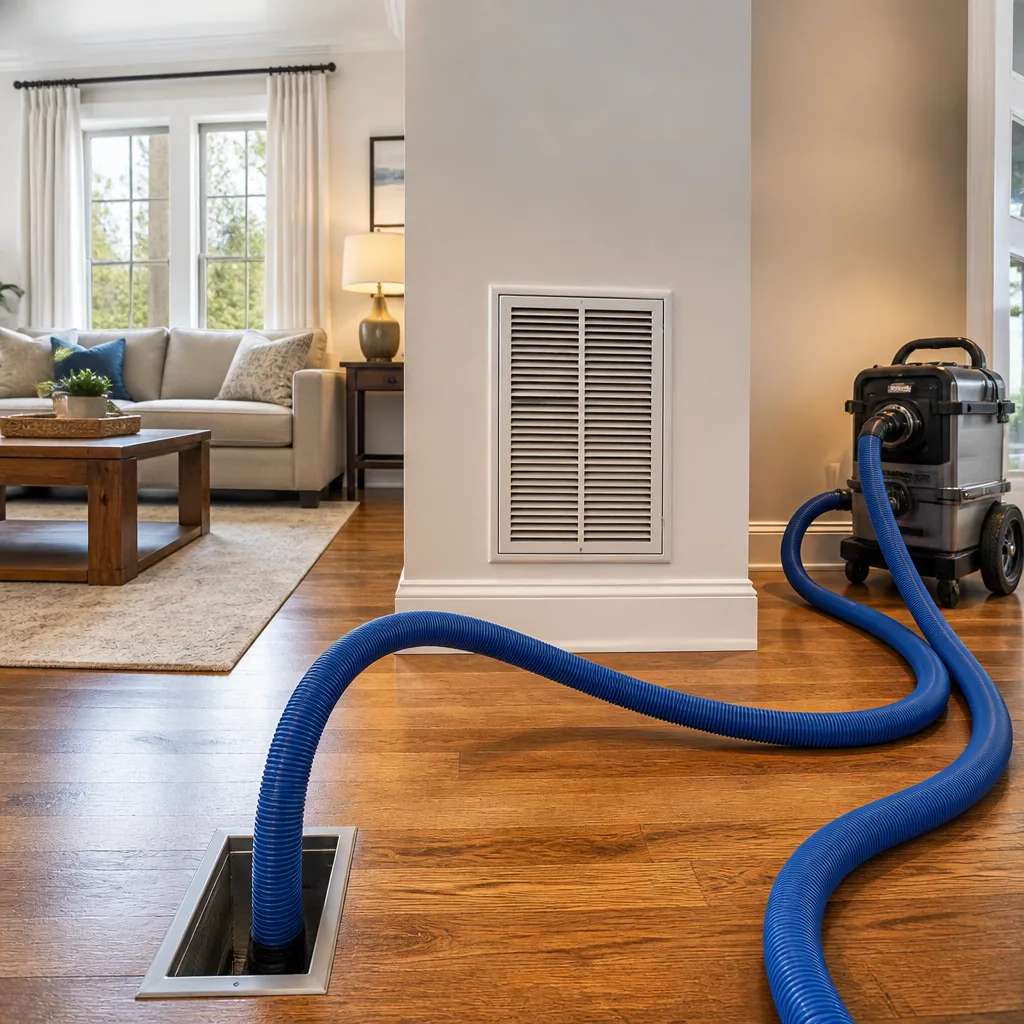 Whole-home duct cleaning
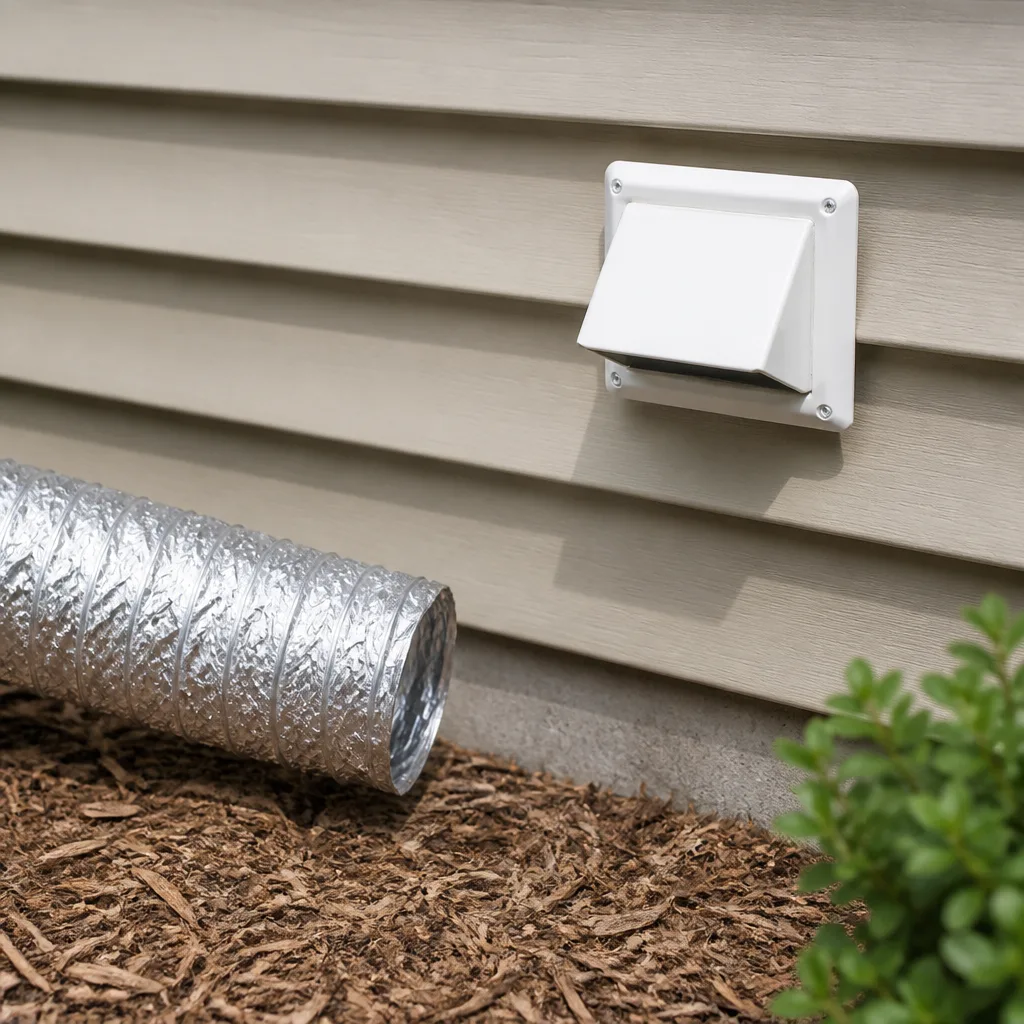 Dryer vent cleaning
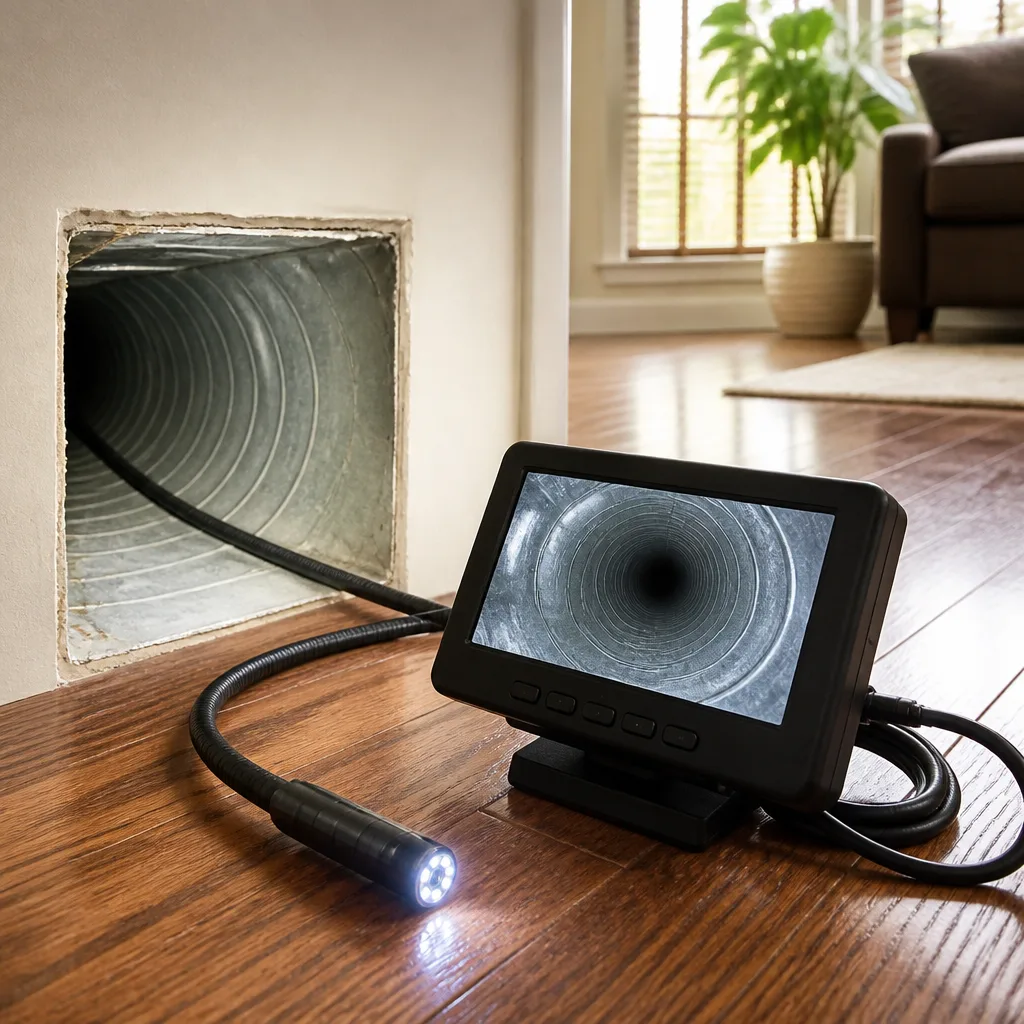 Camera inspection
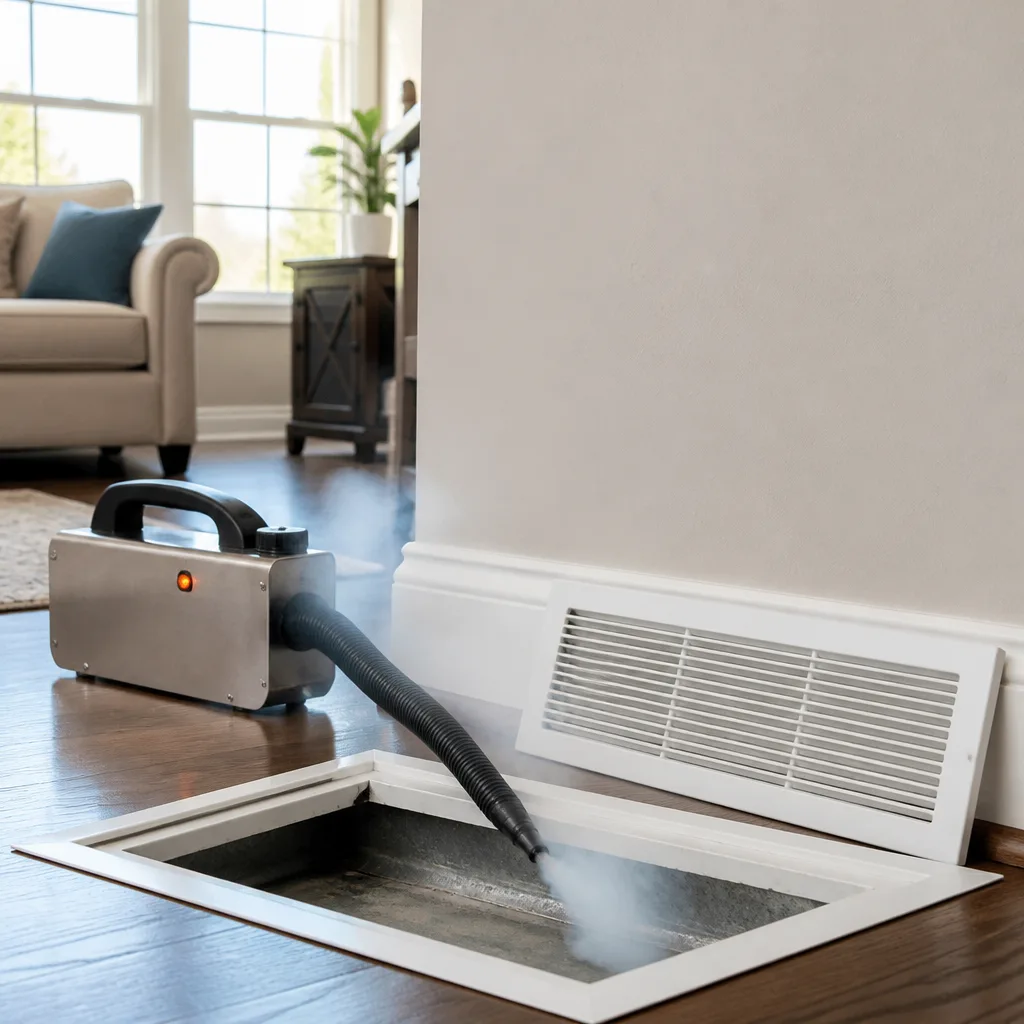 Sanitizing & deodorizing
Whole-system duct and dryer vent check with before-and-after photos - you see exactly what came out of your vents
That "$99 whole-house special" is a bait ad - the real number appears once they are in your hallway, or the "clean" is a shop-vac at the register. We photograph the inside of your ducts before and after instead.
The Complete Air Duct Cleaning Guide for Ventura Homeowners
Ventura County issued air quality alerts on more than 30 days in recent years due to wildfire smoke, and every one of those events pushed fine particulate matter directly into residential duct systems that most homeowners never had inspected afterward. This Complete Guide to Air Duct Cleaning in Ventura explains what actually accumulates in your ducts here on the coast, how a legitimate cleaning is performed, what equipment matters, and how to verify the work was done correctly. If you’ve wondered whether duct cleaning is worth it, how it works, or what it should cost in Ventura, you’ll find straight answers below.
Quick Answer
Air Duct Cleaning in Ventura removes accumulated dust, debris, and contaminants from your HVAC system’s supply and return ductwork using professional agitation and HEPA extraction equipment. For most Ventura homes, a thorough cleaning takes 3 to 6 hours depending on system size and contamination level, and should include before-and-after documentation plus a filter check. The goal is measurable improvement in airflow and indoor air quality, not just a visual once-over.
Styles & brands we work with
- Whole-home duct cleaning
- Dryer vent cleaning
- Camera inspection
- Sanitizing & deodorizing
Table of Contents
- What Air Duct Cleaning Actually Involves
- Why Ventura’s Climate Creates Unique Duct Problems
- The Equipment That Separates Real Cleaning from a Shop Vac
- Step-by-Step: What a Proper Cleaning Looks Like
- What Good Documentation Looks Like
- How Ventura’s Older Homes Change the Approach
- When to Schedule Cleaning in Ventura
- Common Mistakes to Avoid
- When to Call a Professional
- Frequently Asked Questions
What Air Duct Cleaning Actually Involves
Air duct cleaning is the physical removal of accumulated material from the interior surfaces of your HVAC system’s ductwork. That material includes dust, pollen, pet dander, construction debris, and in some Ventura homes, soot particles from wildfire smoke events. A proper cleaning addresses the supply side, the return side, the registers, the plenums, and the air handler or furnace cabinet. It is not a filter change, and it is not a spray-and-wipe job.
The industry standard for residential duct cleaning follows the principle of source removal: agitate debris from duct walls, then extract it with negative-pressure vacuum equipment. Without both steps, you’re either loosening debris without capturing it or vacuuming without actually dislodging anything. This is the core distinction between a legitimate cleaning and a low-effort service that runs a vacuum hose into a register and calls it done.
A complete air duct cleaning in Ventura covers the entire system: main trunk lines, branch runs, return ducts, the blower compartment, coils if accessible, and all register openings. We also inspect the duct connections and seals during the process, because a cleaning that leaves gaps or disconnections behind has created a new problem while addressing an old one.
What Gets Removed
- Household dust and lint: the everyday accumulation that circulates when your system runs.
- Pollen and allergens: significant in Ventura due to the long flowering season along the coast and inland valleys.
- Wildfire soot and fine particulate: PM2.5 particles that settle in ducts after smoke events and re-enter the air stream for months afterward.
- Pet hair and dander: often compacted in return ducts and around registers.
- Moisture-related growth: Ventura’s marine layer humidity can support mold or mildew in ducts that have condensation issues or poor seals.
- Construction debris: drywall dust, wood shavings, and insulation fragments found in systems after remodeling, common in Ventura’s older housing stock.
Why Ventura’s Climate Creates Unique Duct Problems
Ventura sits in a specific meteorological zone where two forces combine to make duct contamination worse than in inland California cities. First, the marine layer brings consistent overnight humidity, especially in neighborhoods west of the 101 like Midtown, the Avenue, and coastal stretches near San Buenaventura State Beach. Second, seasonal Santa Ana winds and wildfire events push dry, particulate-laden air through the region. Homes here oscillate between damp and dusty conditions, and duct interiors reflect both.
The moisture factor matters because humid air moving through ducts creates condensation on interior surfaces, especially where duct runs pass through uninsulated attics or crawlspaces. That condensation acts as a magnet for dust and pollen, forming a paste-like coating on duct walls. In inland cities with consistently dry air, particulates tend to stay loose and blow through. In Ventura, they often stick. We regularly see duct interiors in older Ventura homes with a dark, adhered film that homeowners mistake for soot alone. It is usually a combination of moisture-bonded dust and organic material, and it requires physical agitation to remove properly.
Wildfire smoke then layers on top of that. When the Thomas Fire or more recent events pushed smoke through the county, the fine particulate did not stay outside. It entered homes through registers, window gaps, and return air intakes, and it settled inside the system. After the smoke cleared, the ducts still held those particles. For allergy sufferers and anyone with respiratory sensitivity, that means indoor air quality stayed compromised long after the outdoor air cleared.
This dual pattern, moisture-fed buildup plus episodic smoke loading, means Ventura homeowners often need cleaning more frequently than the generic nationwide guidance of every 3 to 5 years. The specific condition of each system matters more than a calendar schedule, but the local climate raises the baseline contamination rate.
The Equipment That Separates Real Cleaning from a Shop Vac
Most of the difference between a professional duct cleaning and a cheap one comes down to the equipment on the truck. A consumer-grade vacuum connected to a rotating brush attachment does not have the airflow volume to create negative pressure across an entire duct system, and it lacks the filtration to prevent what it does capture from blowing back into the living space. This is not a minor detail. It is the entire job.
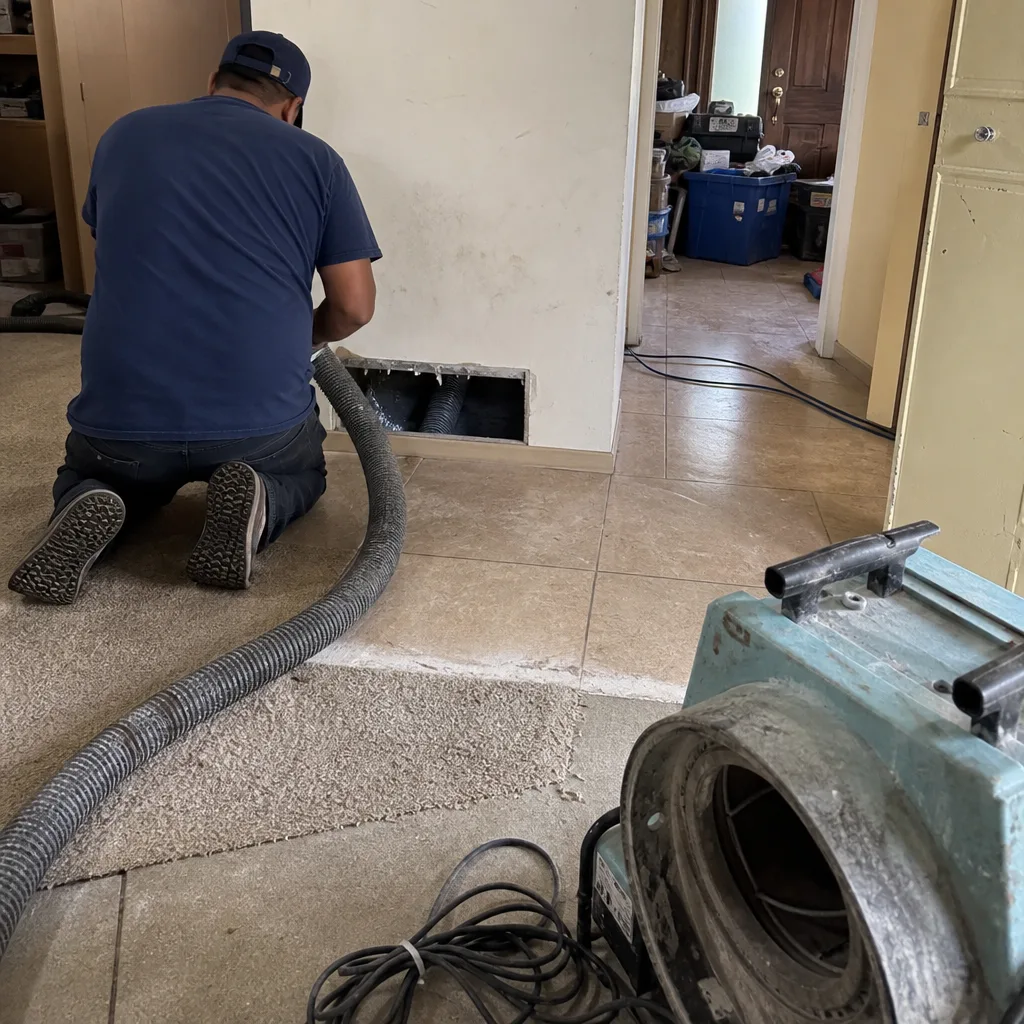
Contact-cleaning systems like the Rotobrush approach work differently. The system inserts a rotating brush head into the duct that physically contacts the walls and breaks the adhered debris loose. Simultaneously, a high-volume vacuum extracts the dislodged material at the point of contact, not later. This is the difference between scrubbing a floor and just waving a hose over it. Most Ventura systems, especially those with the sticky, moisture-bonded buildup we described, require this kind of mechanical agitation. Air alone does not remove it.
For extraction, we use Nikro HEPA-rated vacuum equipment. HEPA filtration matters because the smallest particles, the ones that cause respiratory irritation, are the ones a standard filtration setup will push right back into the room. Nikro equipment is specified for mold and remediation projects precisely because of its containment standard. Running that same grade of vacuum on a residential cleaning means the air leaving the system is cleaner than the air going in.
Additionally, Abatement Technologies equipment handles containment and negative-pressure control during the job. This is the same brand standard used in remediation and commercial IAQ settings, where preventing cross-contamination is non-negotiable. In a residential duct cleaning, that means dust and debris generated during the cleaning process stays contained, not scattered through the house.
Negative Pressure and Why It Matters
Effective duct cleaning requires negative pressure: the vacuum must pull more air out of the duct than enters it, so that loosened debris flows toward the collection point rather than drifting back into rooms. Portable units can achieve this on smaller systems if they’re sized correctly and connected at the right point. Truck-mounted systems generate significantly more airflow and are typically used for larger homes or heavily contaminated systems. The right choice depends on the duct diameter, the length of the runs, and the system configuration, not on routine preference. A qualified technician should assess this before starting.
Step-by-Step: What a Proper Cleaning Looks Like
Every legitimate duct cleaning follows a defined sequence. Skipping steps is where substandard work happens, and homeowners who know the sequence can ask the right questions before the job starts.
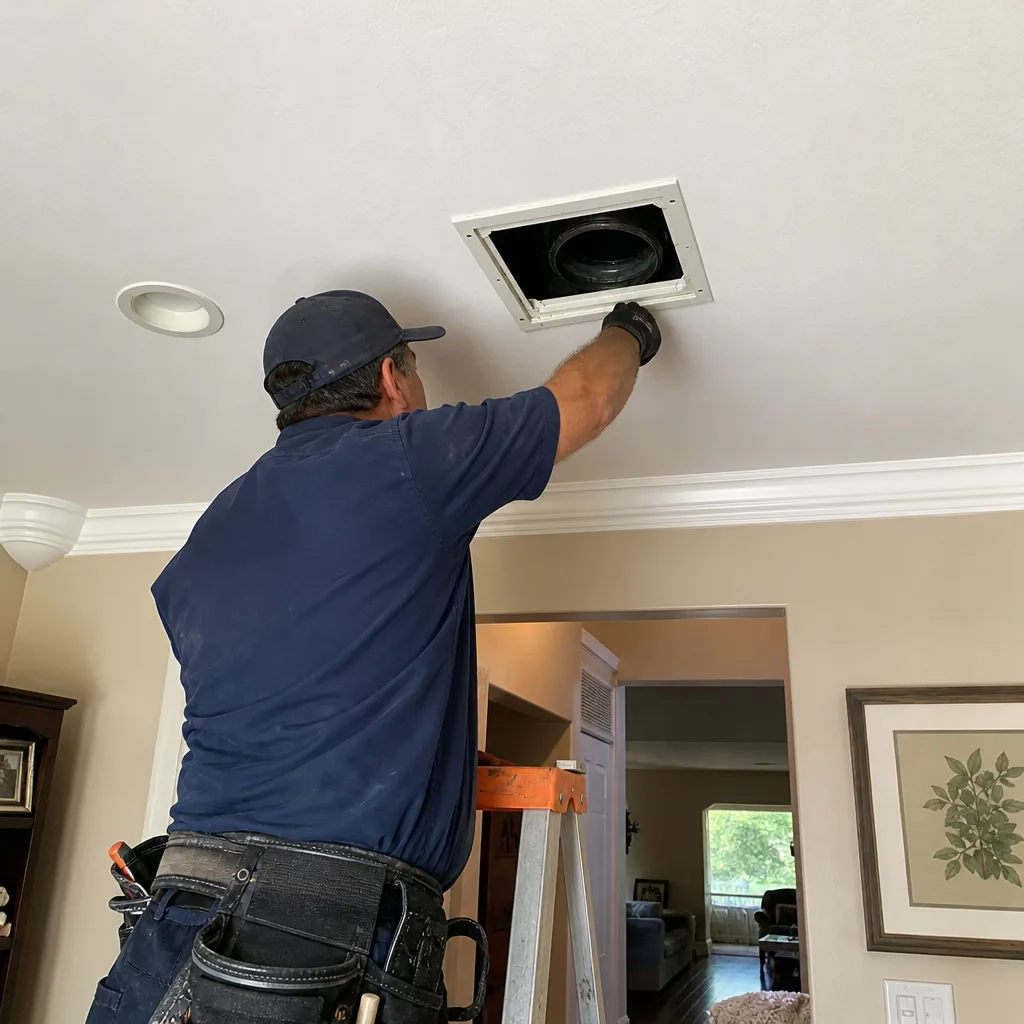
- System inspection and access planning. The technician examines the furnace or air handler, identifies the supply and return plenums, locates the evaporator coil if accessible, and determines the access points for the vacuum connection and agitation equipment.
- Filter removal and isolation. The existing filter is removed and the blower compartment is isolated so debris cannot enter the motor or controls during cleaning.
- Negative pressure setup. The HEPA vacuum is connected at the air handler or main trunk, creating a continuous negative pressure environment that draws air from all register openings toward the collection point.
- Register-by-register agitation. Each supply and return register is opened, and the agitation tool is inserted. The Rotobrush head travels through the branch run, scrubbing the walls while the vacuum extracts the loosened material in real time.
- Main trunk line cleaning. Once the branch lines are done, the technician moves to the main trunk, which typically holds the most material. This requires larger-diameter agitation tools and longer insertion lengths.
- Return-side cleaning. The return ducts are cleaned separately, as they tend to hold lint, pet hair, and the largest debris. In many Ventura homes, the return side is more contaminated than the supply side because it pulls unfiltered air from living spaces.
- Blower and coil inspection. If the blower compartment or evaporator coil show accumulation, the technician documents it and discusses whether coil cleaning is appropriate within the scope of the service.
- Final filter installation. A clean filter is installed, and the system is run briefly to confirm airflow and check for any unusual noise.
- Post-cleaning verification. The technician re-inspects the ducts, typically with a camera, and documents the results. Filter condition, airflow readings, and visual evidence are recorded.
This process takes time. A small single-story home might be completed in three hours. A larger two-story home with extensive duct runs and heavy contamination can take a full day. A company that quotes a fixed 45-minute service for any home is not performing this sequence.
What Good Documentation Looks Like
If you cannot verify the work was done, you are taking someone’s word for something that happens inside walls. The entire point of professional cleaning is that the result is measurable and visible. Legitimate duct cleaning companies provide documentation that would satisfy a skeptical homeowner, because the equipment exists to capture it.
Before the cleaning begins, the technician should insert a camera into several ducts and show you what the interior looks like. This establishes the baseline. On older Ventura systems, this often reveals debris the homeowner had no idea was there: years of dust, pet hair compacted in corners, occasionally construction material from a previous remodel. The camera feed should be visible to you, either live or in recorded form.
After the cleaning, the same camera inspection should show the same ducts. The difference should be unmistakable. Duct interiors should appear clean to bare metal or clean flex-duct interior, with no loose debris remaining. If the before and after photos look similar, the cleaning was inadequate, regardless of what the invoice says.
Beyond camera work, particulate readings from the airflow can provide quantitative verification. Some technicians use particle counters to measure airborne particulate levels before and after the cleaning, which gives a number you can compare. Filter condition is the third verification point: a filter that was clean before the job and looks dirty afterward is not necessarily a sign of a problem, it may indicate the cleaning released loose debris that the filter then captured. But the technician should note and explain any change in filter condition.
For residents looking at a complete Air Duct Cleaning Ventura home service, the verification step is where quality separates from effort. If a company cannot or will not show you before-and-after documentation, treat that as a red flag.
How Ventura’s Older Homes Change the Approach
A significant portion of Ventura’s housing stock predates 1990, and those homes often have duct systems built with materials that respond differently to cleaning techniques. Sheet metal ducts, the standard in newer construction and many rehabs, can handle aggressive brushing. Flex duct, common in older homes where additions or retrofits were done, requires a more careful approach. Fiberboard duct, which appears in some pre-1980 construction, needs the most delicate handling.
Flex duct consists of a wire coil supporting a plastic or foil inner liner, wrapped in insulation. Aggressive agitation with stiff metal bristles can tear the liner, creating leaks that then pull attic air or crawlspace air into the system. A proper cleaning uses softer agitation tools, lower insertion forces, or in some cases, very deliberate manual cleaning through accessible openings. Tearing flex duct creates a problem worse than the dust, so the technician must know what material they are working with before applying tools.
Fiberboard ducts are trickier. The interior surface is a pressed fiber material that absorbs moisture and can harbor growth. Cleaning it requires moisture-free agitation and sometimes chemical sanitization after mechanical removal. The surface is not as durable as metal, so the contact pressure must be moderated. In severe contamination cases, the better answer is duct replacement or repair rather than attempting to clean a material that cannot be restored to a cleanable surface. That ties directly to why air duct repair in Ventura matters: some systems reached a point where cleaning alone cannot resolve the underlying condition.
An experienced technician identifies the duct material during the initial inspection and adjusts the method accordingly. Homeowners should ask what kind of duct they have and whether the pricing reflects the cleaning method appropriate to that material.
When to Schedule Cleaning in Ventura
A generic recommendation to clean ducts every three to five years ignores what actually drives contamination rates in a specific region. For Ventura homeowners, the schedule should be tied to local events and system condition, not a calendar alone.
After Santa Ana wind events. The fall Santa Ana pattern pushes dry air, dust, and sometimes fire-driven smoke across the county. Even without a nearby fire, these winds carry fine particulate that settles into your system through outdoor air intakes and open windows. If you run your HVAC system during Santa Ana conditions, the system is actively drawing that air through your ductwork.
After wildfire smoke advisories. Any period where Ventura County issues air quality alerts for smoke is a trigger event for duct inspection. Smoke particles are extremely fine, embed in the sticky residue inside ducts, and do not leave on their own. Waiting until the next routine cleaning means months or years of those particles recirculating.
After remodeling or construction. Drywall dust and construction debris infiltrate duct systems in ways that standard air filtering never fully captures. If you have remodeled, particularly in older Ventura homes where work may have occurred without duct sealing during construction, a post-remodel cleaning should be part of the project closeout.
When you observe specific symptoms. Dust accumulation on surfaces within days of cleaning, visible debris from registers, musty odors when the system runs, or unexplained allergy symptoms indoors all warrant an inspection. These are not normal seasonal variations; they suggest something inside the system is contributing.
At move-in. When you buy a home in Ventura, you inherit the previous owner’s duct history. You do not know when the system was last cleaned, whether it was ever cleaned, or what has accumulated in decades of use. A move-in cleaning establishes a known baseline before your furniture and belongings start circulating through rooms.
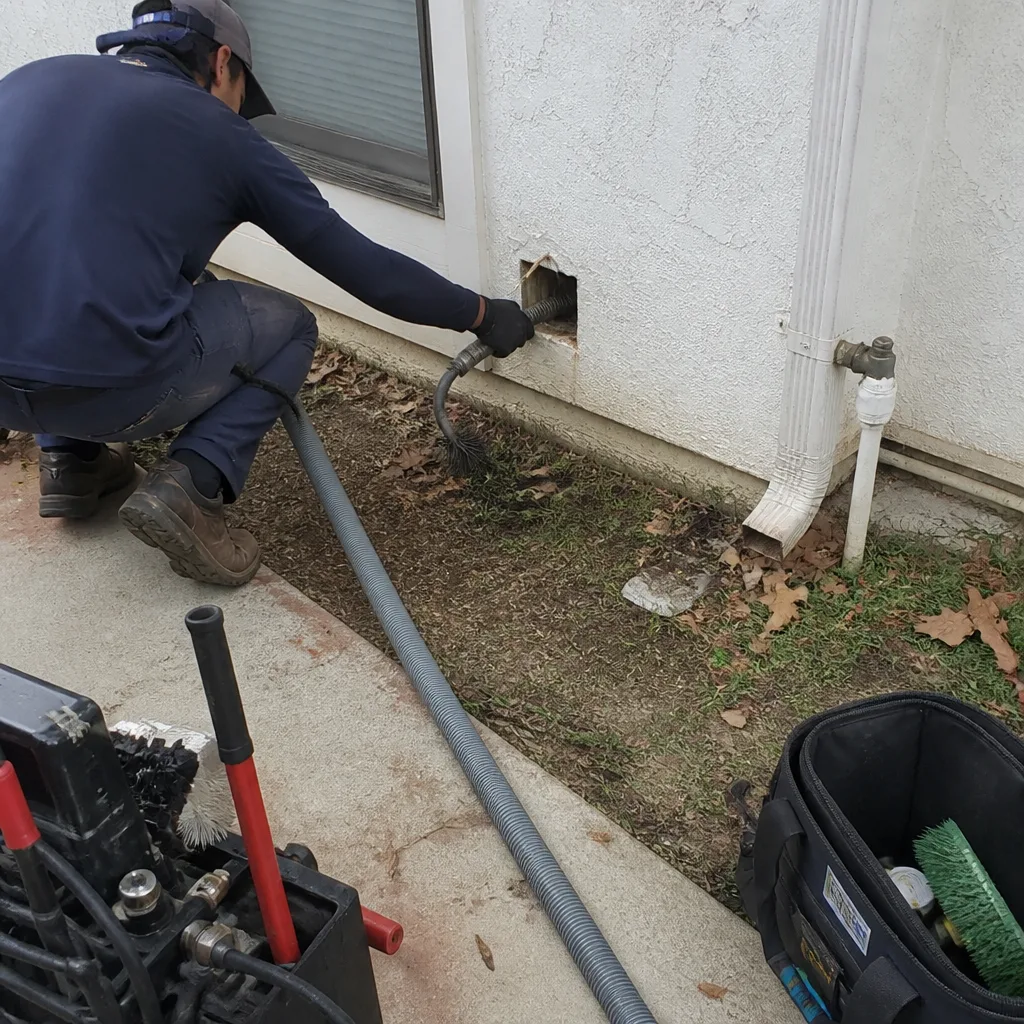
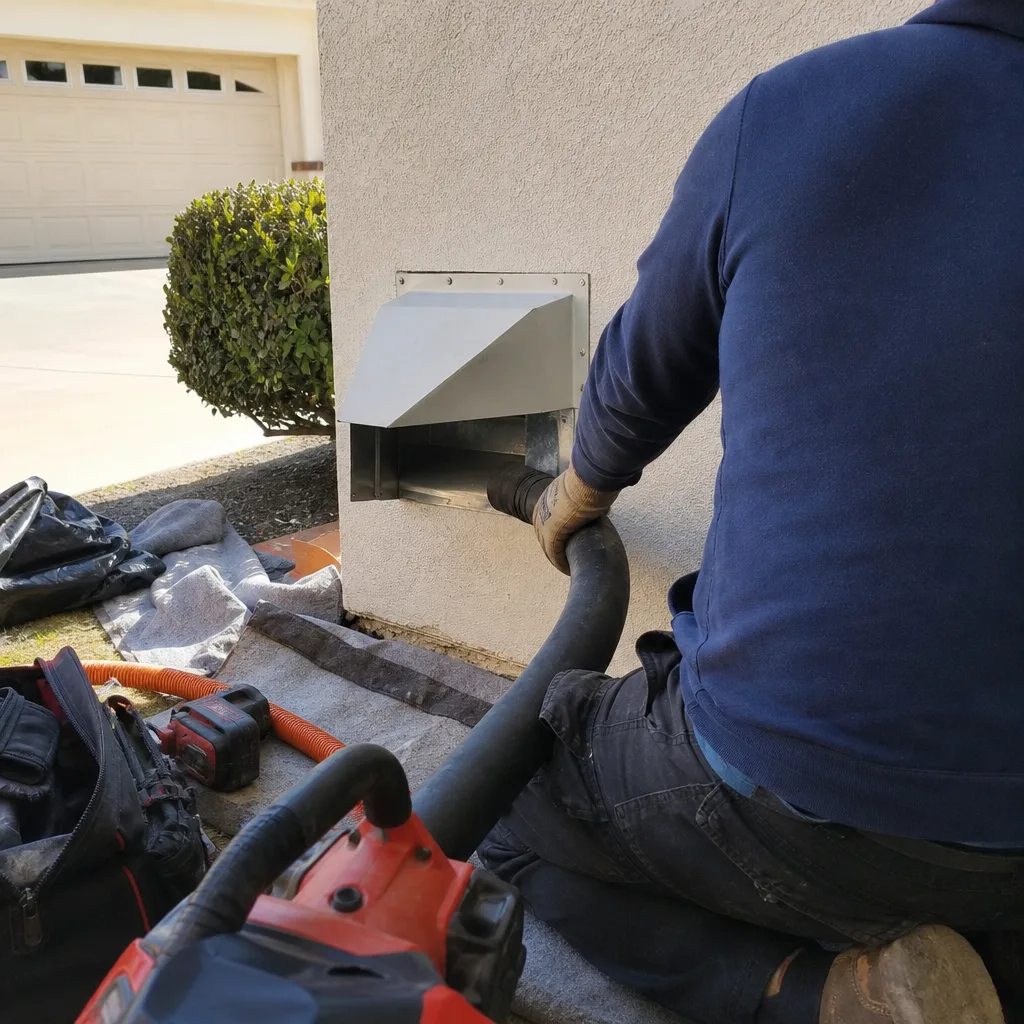
A useful related service to consider at the same time is dryer vent cleaning in Ventura. The dryer vent is a separate system from the HVAC ducts, but both are affected by the same household environment, and dryer vents represent a documented fire risk when neglected. Scheduling both together gives you a complete ventilation reset.
Common Mistakes to Avoid
- Paying for a clean without watching the process. Requesting documentation or at least being present during the initial inspection means you can verify what the interior looked like before and after. A company that refuses to let you see the camera view is not a company you want inside your walls.
- Choosing price over method. In the Ventura market, the lowest-priced duct cleaning typically means a vacuum hose into the register and nothing more. The work is not equivalent to contact cleaning, and you will pay for it twice: once to the cheap company, then again to the company that actually removes the debris.
- Skipping the filter upgrade conversation. The cleaning removes existing contamination, but the right filter prevents future buildup. Products from Honeywell and Aprilaire can dramatically improve what your system captures between cleanings, and a contractor that can discuss and support those options gives you a more complete solution.
- Ignoring the return side. Some cut-rate services clean only the supply ducts and call it a full job. Return ducts typically carry more debris in Ventura homes, and leaving them uncleaned means the system re-contaminates itself within months.
- Treating dryer vent cleaning as an afterthought. Lint accumulation in dryer vents is one of the leading causes of household fires, according to NFPA documentation. The dryer vent is not part of the HVAC duct system, but ignoring it while addressing the HVAC ducts leaves a known hazard in place.
- Expecting a spray sanitizer to substitute for physical cleaning. Spraying an antimicrobial into a dirty duct does not remove the debris; it temporarily masks odor while the particulate remains. The mechanical removal is the point. Sanitization can be a useful final step, but it is not a substitute.
- Not addressing damaged ducts found during cleaning. If the inspection reveals torn flex duct, disconnected joints, or gaps in the system, cleaning those areas gives partial results. The repairs should be addressed, and using a single provider for both cleaning and duct repair in Ventura avoids a second scheduling cycle and a second set of fees.
When to Call a Professional
Some homeowners consider DIY vs professional air duct cleaning using rented equipment or attached vacuum hoses. The reality is that residential duct systems are not designed for that approach. Without proper negative pressure, agitation that reaches the full length of each run, and HEPA filtration, a DIY attempt moves debris around without removing it. In the worst cases, it forces debris into rooms through register openings.
You should call a professional when you move into a new home, when you have visible debris or noticeable dust on surfaces immediately after HVAC cycles, when anyone in the household has unexplained respiratory symptoms that worsen indoors, or when you can smell something stale or musty when the system runs. Every one of these signals indicates something inside the system that a visual-only check will not resolve. Air Duct Cleaning Ventura offers free estimates in Ventura – call (855) 507-7508.
Frequently Asked Questions
Air duct cleaning in Ventura typically ranges from $350 to $900 depending on home size, number of ducts, contamination level, and duct material. Single-story homes with simple systems fall toward the lower end, while larger two-story homes with flex duct, heavy buildup, or long duct runs fall toward the higher end. Get a quote that includes the full system, not a per-vent price that escalates after the job starts. Call (855) 507-7508 for an exact quote based on your system.
Request before-and-after camera documentation of the same ducts, and ask to see the video yourself. Legitimate companies capture this as standard practice. The after footage should show visibly clean interior surfaces. Particulate readings and filter condition notes add another layer of verification you can review.
Even newer homes benefit if the system has been exposed to construction dust, wildfire smoke, or pet-heavy indoor environments. The age of the house matters less than what has moved through the system since it was installed. An inspection will tell you whether cleaning is warranted or whether the system is still clean enough to defer.
For most Ventura homes, schedule an inspection every 2 to 4 years, with cleaning as indicated by what the inspection shows. Homes that experience wildfire smoke exposure, Santa Ana dust loading, or remodeling should be checked sooner. The coastal climate accelerates buildup compared to drier inland areas, so treating the 3-to-5-year national guideline as a maximum rather than a target is the safer approach.
The difference is equipment and method. Cheap services typically run a vacuum hose into one or two registers without creating system-wide negative pressure and without contact agitation. We use Rotobrush contact-cleaning tools to physically scrub duct walls and Nikro HEPA vacuums to extract the dislodged material. The result is documented, and the system interior is verifiably clean, not just briefly disturbed.
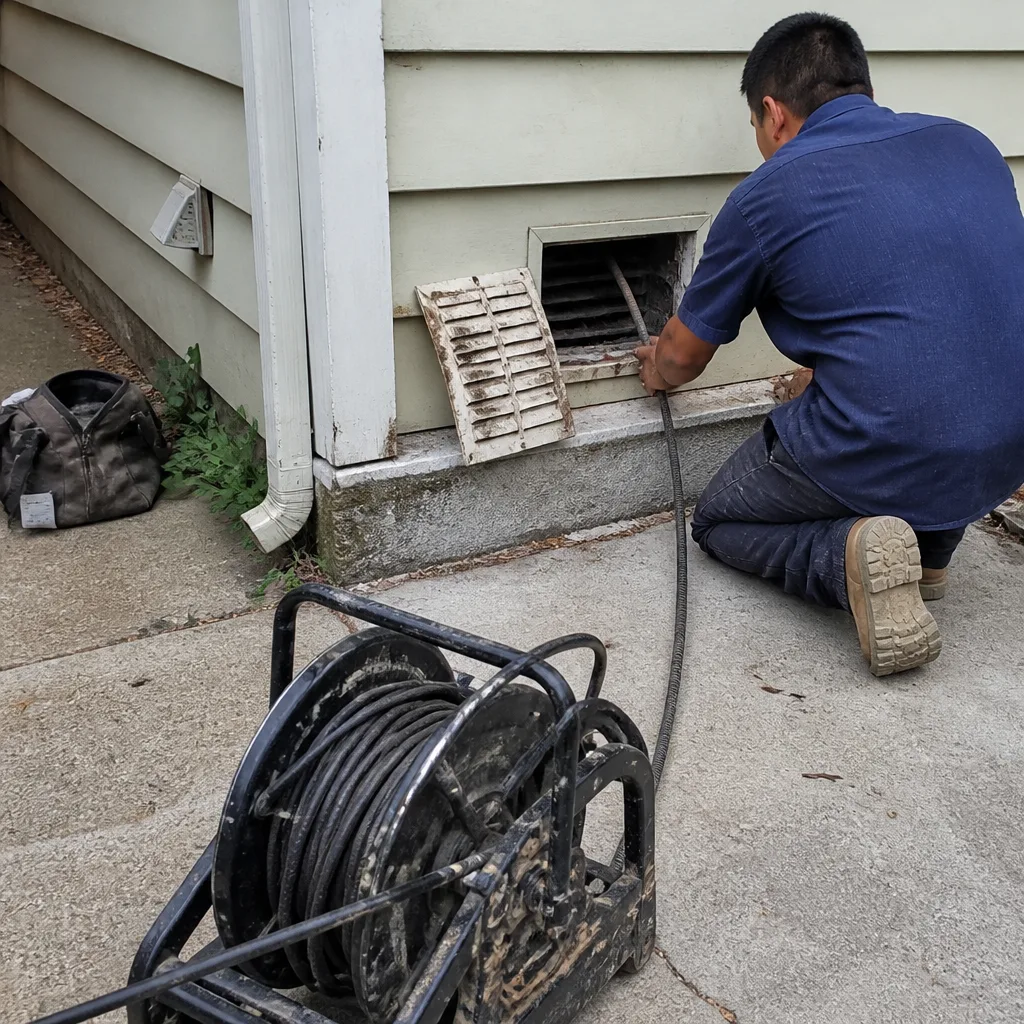
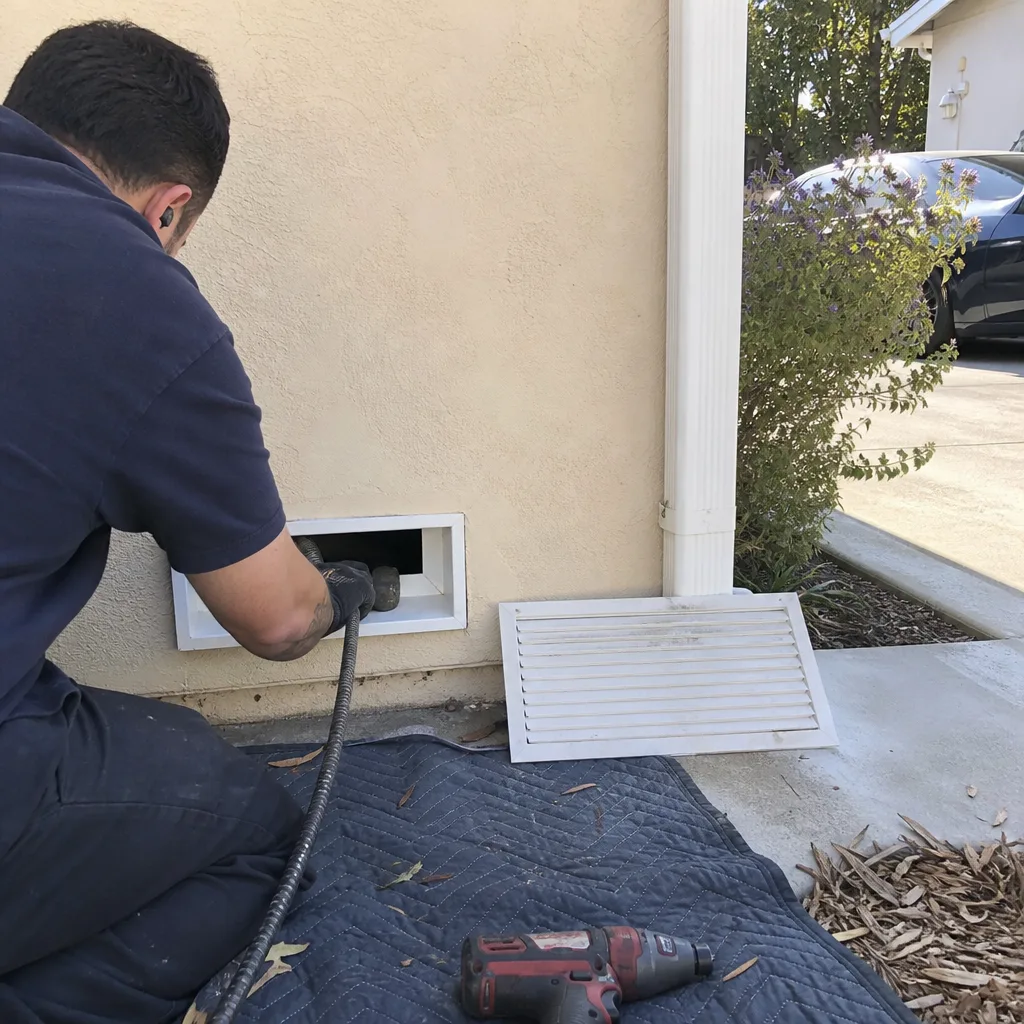
Yes. Dryer vent cleaning is a dedicated service we perform regularly, and scheduling it alongside HVAC duct cleaning makes practical sense. Lint accumulation is a known fire hazard, and the same attention to before-and-after verification applies.
The Bottom Line
Ventura’s coastal climate and wildfire cycle make air duct contamination a more active problem here than in most of California. The only cleaning that matters is one that removes the adhered debris, the fine particulate, and the allergen load, and then proves it happened. Equipment, method, and documentation are the three things that determine whether you got a real cleaning or a recirculated promise. If your system has not been inspected recently, or if you have never verified what your ducts actually look like inside, the next step is a real inspection with documentation you can see. For more guides & resources, visit our blog.
Call Air Duct Cleaning Ventura at (855) 507-7508 for a free estimate. We work throughout Ventura and use the same professional-grade equipment specified for commercial and remediation work.
Written by the team at Air Duct Cleaning Ventura, serving Ventura since 2017.
See the difference
 Before
 After
 Before
 After
 Before
 After