
Last updated November 2, 2026
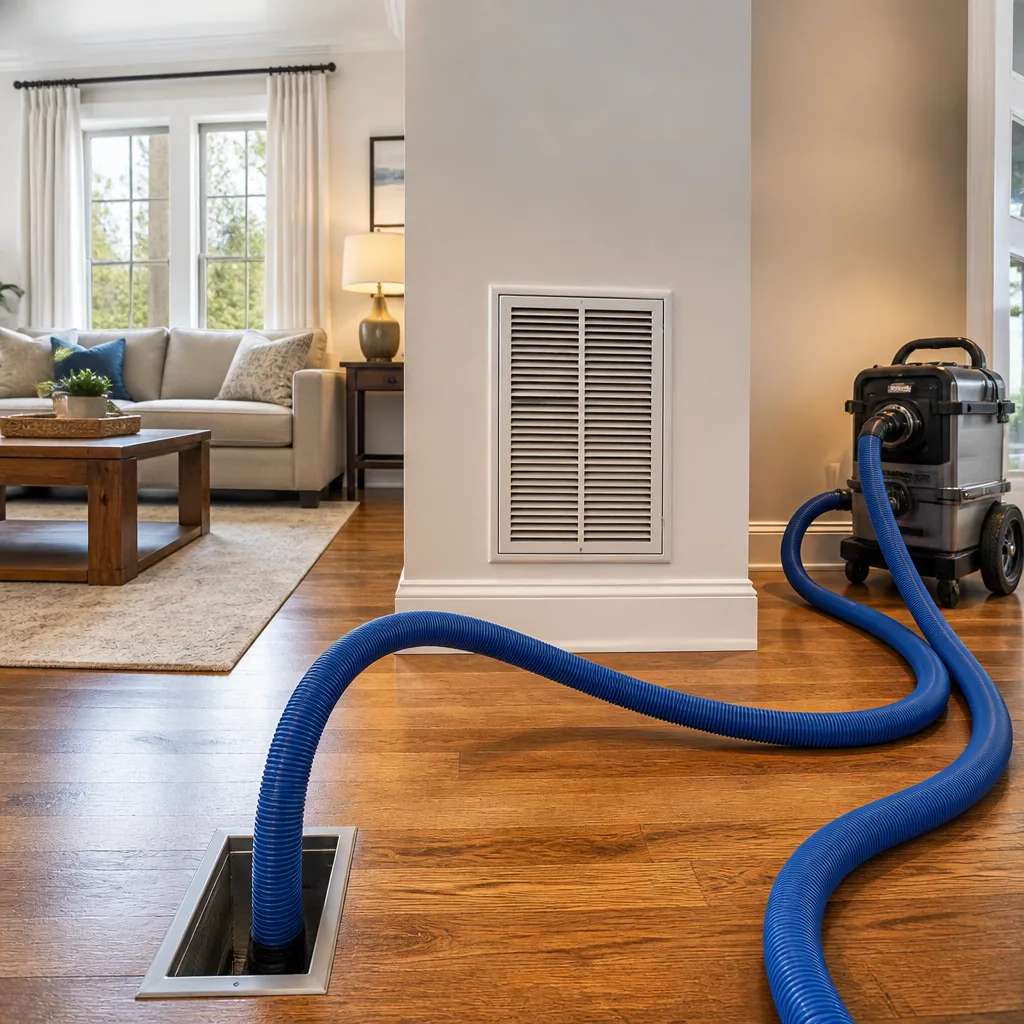 Whole-home duct cleaning
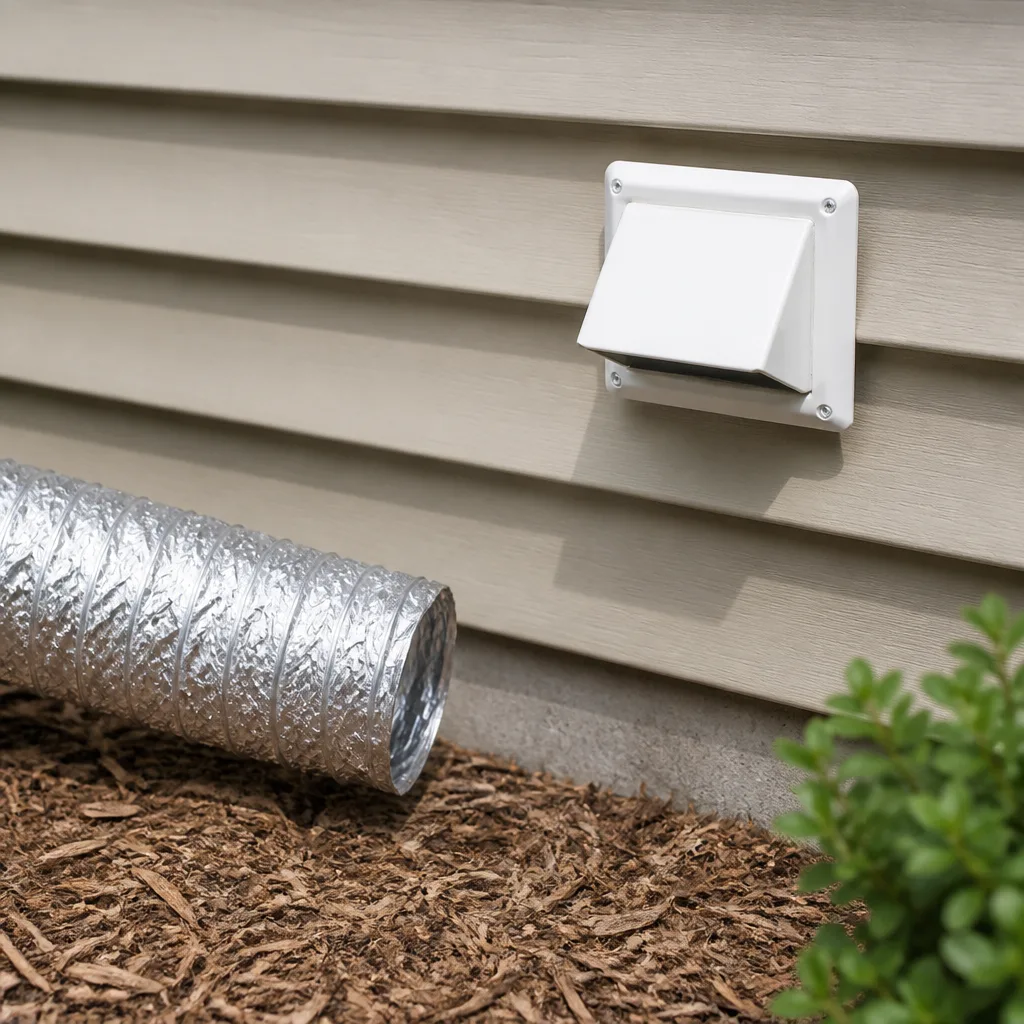 Dryer vent cleaning
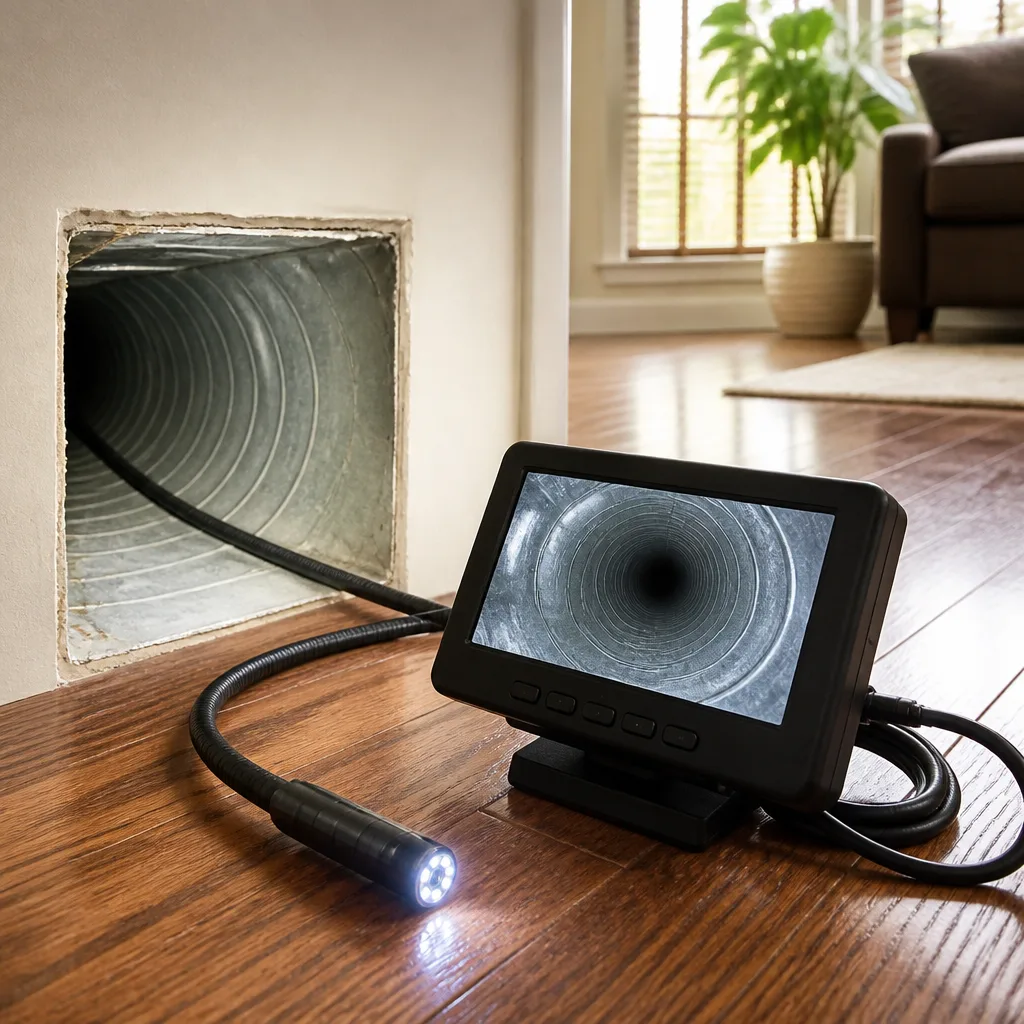 Camera inspection
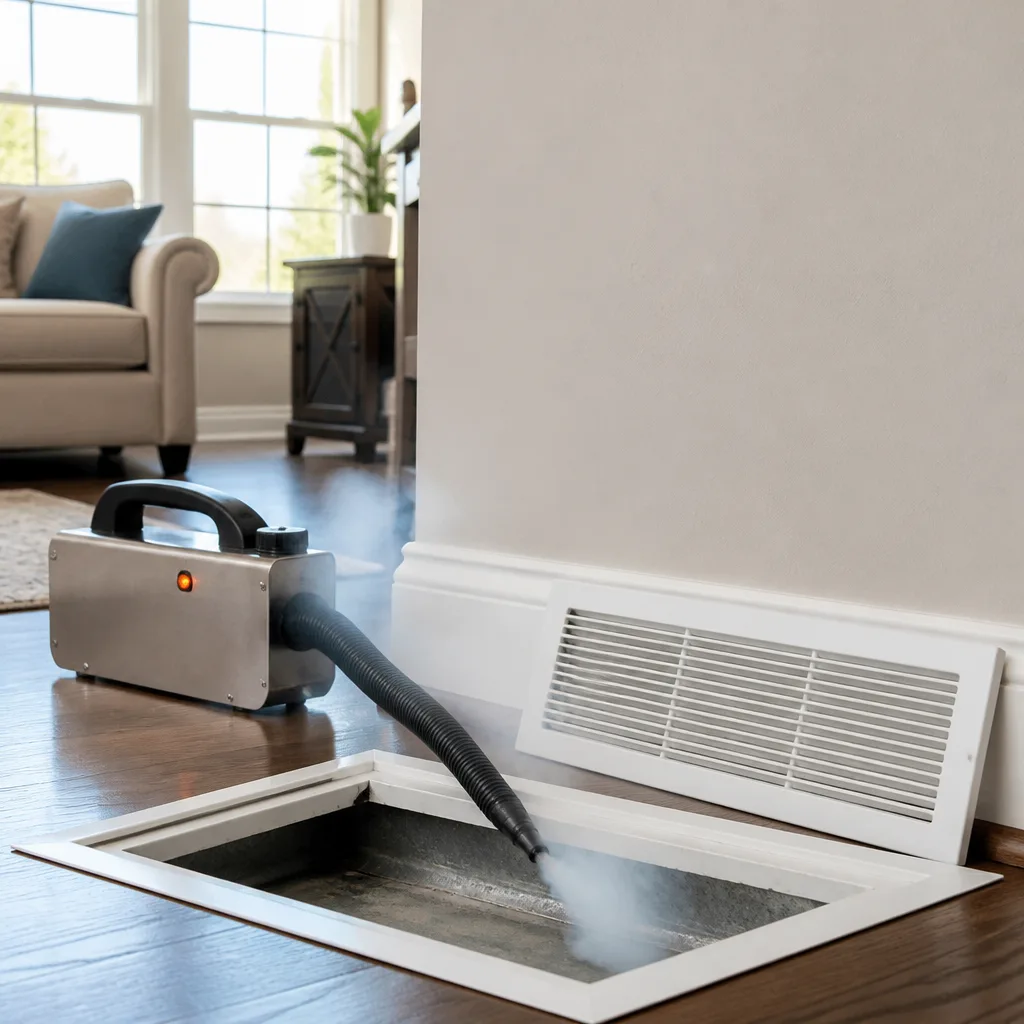 Sanitizing & deodorizing
Whole-system duct and dryer vent check with before-and-after photos - you see exactly what came out of your vents
That "$99 whole-house special" is a bait ad - the real number appears once they are in your hallway, or the "clean" is a shop-vac at the register. We photograph the inside of your ducts before and after instead.
Air Duct Cleaning Emergency Preparedness Guide for Ventura Homes
After the Thomas Fire pushed smoke and ash across Ventura for weeks, a pattern emerged that few people anticipated. Thousands of homes ran their HVAC systems normally during and after the smoke events, effectively using their air handlers as distribution systems for whatever particulate had settled into the ductwork. By the time homeowners connected musty odors, persistent coughs, and gray dust on furniture to their ventilation systems, particles had been recirculating through living spaces for days or weeks. This guide walks through what to do before, during, and after a smoke or ash event so you can make informed decisions instead of guessing, and you can explore more guides & resources on our site. It covers shutdown triggers, inspection sequences, insurance documentation, and what professional-grade cleaning actually involves when smoke is the contaminant.
Quick Answer
Air duct cleaning after wildfire smoke in Ventura typically requires shutting down the HVAC system during high-AQI events, conducting a visual and photographic inspection of registers and filter media before restarting, and then scheduling professional cleaning with HEPA-rated extraction equipment if smoke particulate has entered the duct interior. Surface ash on registers does not automatically mean the duct walls are contaminated, but fine smoke particulate that passed through the filter and coated the blower, coil, and duct lining requires equipment beyond household tools to remove. The decision sequence in this guide, paired with our Air Duct Cleaning Maintenance Checklist for Ventura Homeowners, tells you exactly what to inspect, what to document, and when to call a professional.
Styles & brands we work with
- Whole-home duct cleaning
- Dryer vent cleaning
- Camera inspection
- Sanitizing & deodorizing
Table of Contents
- Pre-Event Protocol: What to Do Before Smoke Arrives
- Reading Ventura AQI Numbers: When to Shut the System Down
- Post-Event Inspection: The Sequence That Tells You What You’re Dealing With
- Surface Ash vs. Particulate Infiltration: Why the Distinction Matters
- Insurance Documentation After Fire-Adjacent Air Quality Events
- Post-Cleaning Verification for Smoke Contamination
- What Professional-Grade Smoke Remediation Equipment Actually Does
- Common Mistakes to Avoid
- When to Call a Professional
- Frequently Asked Questions
Pre-Event Protocol: What to Do Before Smoke Arrives
Wildfire season in Ventura is no longer a hypothetical. The Thomas Fire, Woolsey Fire, and subsequent seasons have established a clear pattern: when the Santa Ana winds shift and a fire ignites in the hills, smoke can blanket the city within hours. Being prepared before that happens changes the entire calculus.
The first step is knowing your system. Walk through your home and identify every return register and supply register. Count them. Note which rooms have returns. This matters because when you need to decide whether to run the system during a smoke event, the layout affects how quickly contaminated air circulates. Homes with a single central return pull air from one location and push it everywhere, which means smoke drawn in through that return gets distributed to every room. Homes with multiple returns still move air efficiently, but the intake points are more distributed.
Second, check your filter’s MERV rating. Most Ventura homes run MERV 8 or lower, which captures larger dust but allows fine smoke particulate to pass through. Smoke particles from wildfire range from 0.4 to 0.7 microns, which requires a MERV 13 or higher filter to capture effectively. If your filter is below MERV 13 and a smoke event is imminent, you have two options: upgrade the filter before the smoke arrives, or plan to keep the system off. A MERV 13 filter with a standard 1-inch slot will restrict airflow more than a lower-MERV filter, so confirm your blower can handle the added resistance. Some older systems cannot.
Third, seal any gaps around registers, especially in attics and crawlspaces. Smoke finds its way in through the same gaps that leak conditioned air. This is not a permanent fix, but during an active smoke event, reducing passive smoke intrusion helps keep interior particulate levels lower.
Fourth, if you have a Honeywell or Aprilaire whole-home filtration system installed, review its current settings. These systems offer filtration upgrades that can reduce smoke particulate when the HVAC fan runs. If you do not have one, this is the moment to consider whether your household’s allergy or respiratory sensitivities justify the investment before the next fire season begins.
Reading Ventura AQI Numbers: When to Shut the System Down
Air Quality Index numbers are publicly available and updated hourly, but most homeowners never learn what the thresholds mean for their HVAC system specifically. Here is a practical breakdown for Ventura conditions.
When AQI reads between 0 and 50, the system can run normally. Between 51 and 100, the air is acceptable but sensitive individuals may notice mild effects. During fire season, this is the range where you should already be monitoring. Between 101 and 150, sensitive groups such as children, older adults, and people with asthma should limit outdoor exposure. For your HVAC system, this is the range where you should consider switching the thermostat fan from AUTO to ON only if you have a MERV 13 or better filter installed. Running the fan continuously with a capable filter provides some indoor air cleaning. Running it with a low-MERV filter just circulates particulate.
Above 150 AQI, the math changes. At this level, wildfire smoke contains enough fine particulate that running a system with anything less than MERV 13 filtration actively worsens indoor air quality. The recommendation from Air Duct Cleaning professionals in Ventura is straightforward: shut the system down entirely. Close all registers. If you have window units or portable air purifiers with HEPA filters, run those instead. The central system becomes a liability, not an asset, until outdoor air quality recovers.
Above 200 AQI, which Ventura has hit multiple times during major fire events, even systems with MERV 13 filters should be shut down. The particulate load overwhelms the filter capacity, and the filter itself becomes a source of trapped smoke compounds that off-gas into the airstream. Seal registers with painter’s tape if smoke is visibly infiltrating the home. Wait for AQI to drop below 100 and hold before restarting.
One more consideration: the blower motor. When the system runs during heavy smoke, fine particulate coats the blower wheel, the evaporator coil if you have central air, and the interior of the air handler. This coating is not removed by changing the filter. It sits there until the next cleaning, and every time the fan runs, some of it re-enters the airstream. This is why a smoke event is not just a filter change issue. It is a system contamination issue.
Post-Event Inspection: The Sequence That Tells You What You’re Dealing With
When the sky clears and AQI drops back into safe ranges, the impulse is to turn the system back on and get back to normal. Resist that impulse long enough to complete a structured inspection. Here is the sequence we recommend to Ventura homeowners.
- Document the exterior before opening anything. Photograph the outdoor compressor or heat pump unit, the area around the intake vents, and any visible ash accumulation on window sills, patio surfaces, or eaves. These photos establish the environmental conditions the system was exposed to, which matters for insurance.
- Remove and photograph the filter. Do this before touching anything else. If the filter is gray, brown, or visibly coated with fine particulate, that is evidence of what the system was pulling in. Photograph the filter against a white background with a date stamp. Save it in a labeled bag if you plan to file an insurance claim.
- Inspect the filter slot and blower compartment. Using a flashlight, look into the return plenum. If surfaces show a gray film, that is smoke particulate. If surfaces look clean but the filter was dirty, the filter did its job and the downstream contamination may be limited.
- Check supply registers in every room. Remove one or two registers and look inside the duct opening. Gray streaks or film on the duct walls indicate particulate made it past the filter and into the supply side. This is the critical finding that distinguishes a filter-only contamination from a full-duct contamination.
- Smell the system. Wait until the system has been off for an hour, then stand near a supply register and run the fan in ON mode for five minutes. If you smell smoke, wood char, or an acrid odor, the duct interiors or the blower assembly are holding smoke compounds. This odor will not clear with a filter change.
- Test run for thirty minutes with a new filter installed. If the system runs without odor and the air feels normal, document the process and continue monitoring. If any odor, dust migration, or respiratory irritation occurs, shut it down and call for professional assessment.
This sequence takes about an hour and gives you a clear picture of whether the smoke was stopped at the filter or moved deeper into the system. The distinction determines everything about what happens next.
Surface Ash vs. Particulate Infiltration: Why the Distinction Matters
Not all smoke contamination is the same, and conflating the two leads to either unnecessary work or inadequate work. Here is the difference as we see it across Ventura homes after major fire events.
Surface ash contamination is exactly what it sounds like: ash that settled on horizontal surfaces, including registers, the top of the air handler if it is exposed, and the area around return grilles. This ash is a nuisance and a respiratory irritant when disturbed, but it has not entered the airstream in significant quantities. Cleaning surface ash is typically a matter of wiping surfaces with damp cloths, vacuuming with a HEPA-filtered vacuum, and changing the air filter. The duct interiors are not involved. This is the best-case scenario after a fire-adjacent air quality event.
Smoke particulate infiltration is a different problem. Smoke from wildfire is not just ash. It is an aerosol of microscopic carbon particles, volatile organic compounds, and partially combusted material that behaves like a gas. When drawn into a running HVAC system, these particles pass through the return, through the filter if the filter is not rated to capture them, and into the blower, coil, plenum, and duct walls. Once inside, they coat surfaces with a fine, oily film. That film continues to release odor compounds for months, and it re-enters the airstream every time the fan runs. This is the scenario that requires professional intervention with contact-cleaning equipment and HEPA extraction, not a household vacuum and a new filter.
Here is the practical test: if you remove a supply register and the duct wall behind it feels greasy or leaves a gray smudge on a white cloth, you are dealing with particulate infiltration. If the duct wall is dusty but dry and rubs clean, you are likely dealing with normal accumulation that predates the smoke event. The oily residue is the telltale sign of smoke.
Insurance Documentation After Fire-Adjacent Air Quality Events
When smoke from a distant fire affects your home, insurance coverage is not automatic. Policies vary, and adjusters apply different standards depending on whether the home was in an evacuation zone, within a certain distance of the fire perimeter, or merely downwind. Here is what strengthens a claim for duct cleaning after a smoke event in Ventura.
First, document the timeline. Screenshot AQI readings during the event. Record the dates and times when smoke was visible and when you shut the system down. Your thermostat app, if you use one, may have run history that shows when the system was operating. Contemporaneous documentation carries more weight than retrospective explanations.
Second, keep the filter. A visibly smoke-loaded filter is physical evidence that your system was processing contaminated air. Photograph it immediately, then seal it in a zip-top bag. Do not throw it away until the claim is resolved.
Third, photograph everything before cleaning. This includes registers, the return grille, the blower compartment if accessible, and any visible soot or residue on walls or ceilings near vents. Before-and-after documentation is the standard. If you clean first and photograph later, you have removed the evidence.
Fourth, get a written assessment from a professional. A documented finding of smoke particulate in the duct system, with photos from the inspection, supports the claim in a way that homeowner observations alone cannot. If the assessor uses particle counting or surface sampling, include those results. They provide objective data.
Fifth, understand what your policy actually covers. Some policies exclude damage from smoke unless the fire was within a specified distance, often one mile. Others cover “smoke damage” broadly but require a covered peril to have caused it. The Thomas Fire produced claims where adjusters initially denied duct cleaning but approved it after documentation showed particulate infiltration beyond surface ash. Being prepared with evidence from the start changes those conversations.
Post-Cleaning Verification for Smoke Contamination
Cleaning ducts after a smoke event is only complete when you can verify the result. In our experience working on Ventura systems after fire seasons, verification comes down to five checks.
Particle count before and after. Professional-grade assessment equipment measures particulate concentration in the airstream. A meaningful cleaning should show a measurable drop in particle count after the work is done, not just a visual improvement. If you are hiring a contractor, ask whether they provide before-and-after particle readings.
Odor persistence testing. Smoke odor compounds adhere to surfaces and release slowly. After cleaning, run the system for several hours and then turn it off. If the odor returns after shutdown, residual contamination remains. A clean system should not smell like smoke under any operating condition.
Filter analysis. Install a fresh filter after the cleaning and run the system for two weeks. Remove and inspect the filter. A properly cleaned duct system should produce minimal visible accumulation on a new filter in that window. If the filter looks like the one you removed after the smoke event, the ducts are still releasing particulate.
Visual documentation of duct interiors. This is where equipment matters. A real cleaning includes before-and-after photographs of the duct interior, taken from inside the system. If a contractor cannot show you what the ducts looked like before and after, you cannot verify the work. We provide this documentation on every job because it is the only honest way to demonstrate results.
Respiratory symptom tracking. This is subjective but real. If household members experienced coughing, eye irritation, or sinus symptoms during the smoke event and those symptoms persisted while the HVAC system ran, track whether they improve after cleaning. A meaningful reduction in symptoms after professional cleaning is strong evidence that the system was a contributing source.
What Professional-Grade Smoke Remediation Equipment Actually Does
The difference between a thorough smoke-related duct cleaning and a superficial one comes down to equipment. This is not a matter of preference. It is a matter of physics: smoke particulate is sub-micron, sticky, and embedded in duct surface films. Removing it requires contact agitation and HEPA-rated extraction.
We use Rotobrush contact-cleaning systems on Ventura duct systems because the rotating brush head physically agitates the duct walls, dislodging the particulate film that a vacuum alone cannot pull off. A vacuum moving air through the duct removes loose debris, but smoke residue adheres to surfaces. It requires mechanical contact to break the bond. Once dislodged, the particulate must be captured at the point of removal. That is where Nikro HEPA-rated vacuums come in. HEPA filtration captures 99.97% of particles down to 0.3 microns, which includes the fine particulate that passes through ordinary shop vacuums and gets exhausted back into the living space. Using a consumer-grade vacuum on smoke-contaminated ducts does not remove the problem; it redistributes it.
For homes where smoke exposure has been severe, containment matters during the cleaning itself. Abatement Technologies equipment, built for negative-pressure air control in remediation settings, prevents particulate disturbed during cleaning from spreading into the home. This is the same principle used in mold remediation and asbestos abatement: control the air, capture the particulate, and protect the occupied space.
Beyond the cleaning, whole-home filtration upgrades from Air Duct Cleaning Ventura home brands like Honeywell and Aprilaire give Ventura homeowners a defense layer for the next fire season. A whole-home filtration system installed at the air handler captures smoke particulate before it enters the ductwork in the first place. This is not a substitute for professional cleaning after contamination occurs, but it reduces what gets into the system when smoke events are active. Combined with properly sealed ductwork and regular filter replacement, it changes how the home performs during the next Thomas Fire-scale event.
We also handle Air Duct Repair in Ventura because smoke events often expose pre-existing problems. Leaky joints, separated seams, and crushed sections allow contaminated air to bypass the filter entirely. Cleaning a duct system with open leaks is like filtering water through a colander. Repairs done alongside the cleaning ensure the system actually holds together and the air path is what it should be.
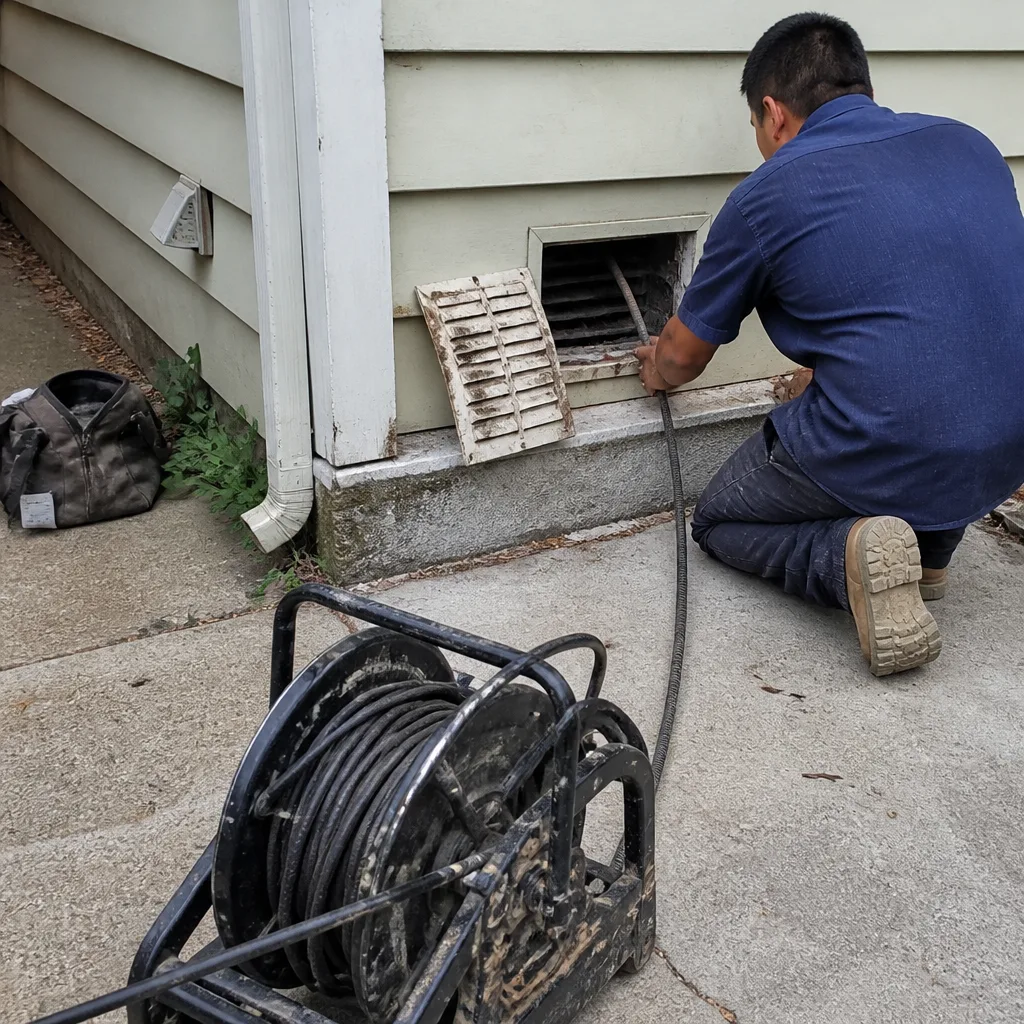
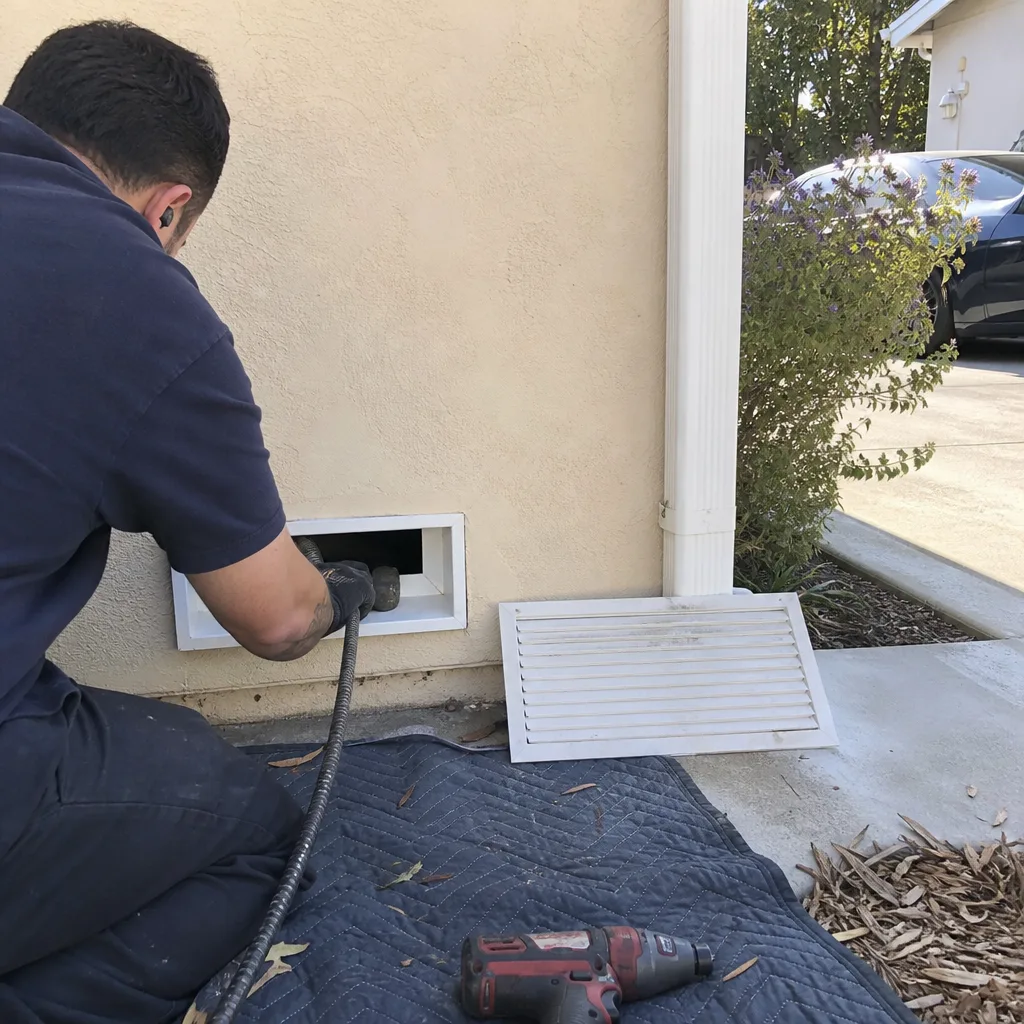
And while this guide focuses on smoke, the same principles apply to Dryer Vent Cleaning in Ventura. Dryer vents accumulate lint that, combined with heat, creates documented fire risk. The Dryer Vent Cleaning in Ventura service addresses that hazard with the same methodical, equipment-serious approach as duct work. During fire season, a blocked dryer vent is an additional heat source and an additional air leakage path, and it deserves attention alongside the HVAC system.
Common Mistakes to Avoid
- Running the HVAC system during a smoke event on a low-MERV filter. This actively pumps fine particulate into every room. Shut the system down above 150 AQI unless you have MERV 13 or better filtration confirmed to be installed and functioning.
- Changing only the filter and calling it done. A dirty filter captures what it can, but smoke particulate that passed through before the filter loaded up is now inside the blower, coil, and ducts. The filter change addresses the symptom, not the system.
- Cleaning visible ash before photographing it. Insurance adjusters rely on documentation. Once you wipe the registers, vacuum the ash, and replace the filter, you have removed the evidence the claim depends on. Photograph first, clean second.
- Using a household vacuum or shop vac on duct interiors. These machines do not capture smoke particulate. They stir it up and exhaust it back into the room. Duct cleaning after a smoke event requires HEPA-rated equipment used by professionals.
- Trusting odor alone as a contamination indicator. Smoke odor fades as particulate settles and off-gasses slowly. A system can smell acceptable while still holding significant particulate that will re-enter the airstream on the next hot day when expansion releases trapped compounds.
- Ignoring the dryer vent during fire season. A lint-loaded dryer vent is a heat source and an air leakage path. Ventura’s dry climate makes lint accumulation faster than in humid regions, and fire season compounds the risk.
- Skipping post-cleaning verification. Without before-and-after documentation, particle counts, and filter inspection after two weeks, you cannot confirm the work actually addressed the contamination. A professional should provide verification, not just a receipt.
When to Call a Professional
Professional assessment is warranted when any of these conditions apply after a smoke event in Ventura: visible gray film inside a supply register, smoke odor persisting after filter replacement, a filter that loaded up within days instead of months, household respiratory symptoms that correlate with HVAC operation, or insurance documentation requiring a written professional finding. If you removed a register and found oily residue instead of dry dust, that is the clearest sign that smoke particulate has coated the duct interior and household tools cannot address it. Our Air Duct Cleaning services include free estimates in Ventura, and we walk through the inspection findings with you before recommending any work. Call (855) 507-7508 to schedule an assessment.
Frequently Asked Questions
Air duct cleaning after wildfire smoke in Ventura typically costs more than standard duct cleaning because smoke remediation requires contact-cleaning systems, HEPA extraction, and often additional containment equipment. Rather than quote a range without seeing the system, we provide a flat-price estimate after inspection, and the price is agreed before work starts. Call (855) 507-7508 for an exact quote based on your system size and contamination level. Estimates are free.
Cheaper quotes usually mean consumer-grade equipment, shorter time in the home, and no verification documentation. When a crew uses a shop vac and a basic brush, they cannot remove smoke particulate that adheres to duct walls, and they cannot prove the system is clean afterward. The difference between an inspection-grade job and a superficial pass is measurable in particle counts before and after, and it is the reason we use Rotobrush contact-cleaning systems and Nikro HEPA vacuums on every job.
You should receive before-and-after photos from inside the duct system, not just a verbal confirmation. You should also see a measurable reduction in particle counts if the contractor provides that data, and you should be able to run the system for two weeks with a fresh filter and see minimal accumulation. If a contractor cannot provide interior documentation of the ducts before and after, you cannot verify the work. Ask for it before you hire.
Household intervention is limited to surface cleaning of registers and filter replacement. The interior duct surfaces, blower assembly, and coil require equipment that reaches inside the system and extracts particulate without redistributing it into the home. Smoke particulate is sub-micron and oily, which means it adheres to surfaces and passes through household vacuum filters. Attempting to clean duct interiors without HEPA-rated contact-cleaning equipment stirs up the particulate without removing it. This is one job where the tool matters as much as the technique.
Coverage depends on your policy language, your home’s distance from the fire perimeter, and the documentation you provide. Claims are stronger when you have AQI screenshots, a sealed and photographed filter, photographs of registers and interior surfaces before any cleaning, and a written professional assessment confirming smoke particulate in the duct system. Policies that exclude smoke damage unless the fire was within a specified distance are common, but documented particulate infiltration beyond surface ash has successfully supported claims that were initially denied, as we detail in our guide to Air Duct Cleaning Permits, Codes & Inspections in CA: What You Need to Know. Start documenting before you clean anything.
Most Ventura homes benefit from air duct cleaning every three to five years, with more frequent service for households with pets, smokers, recent renovations, or residents with respiratory conditions. After a significant smoke event where the system ran during high-AQI conditions, a professional inspection is warranted regardless of the last cleaning date. Smoke contamination is an event-driven problem, not a calendar-driven one. Call (855) 507-7508 if you suspect smoke particulate entered your system this fire season.
The Bottom Line
Wildfire smoke in Ventura is not a hypothetical risk. It is a recurring environmental event that interacts with your HVAC system in measurable ways. The homes that fare best are the ones where homeowners shut systems down at the right AQI threshold, documented conditions before touching anything, and made informed decisions about professional cleaning based on evidence from the inspection sequence in this guide. Smoke particulate that reaches duct interiors requires contact-cleaning and HEPA extraction to remove, and verification matters as much as the cleaning itself. If this fire season left suspicion that your system carried smoke through your home, the free estimate at (855) 507-7508 is the fastest way to get answers.
Written by the team at Air Duct Cleaning Ventura, serving Ventura since 2017.
See the difference
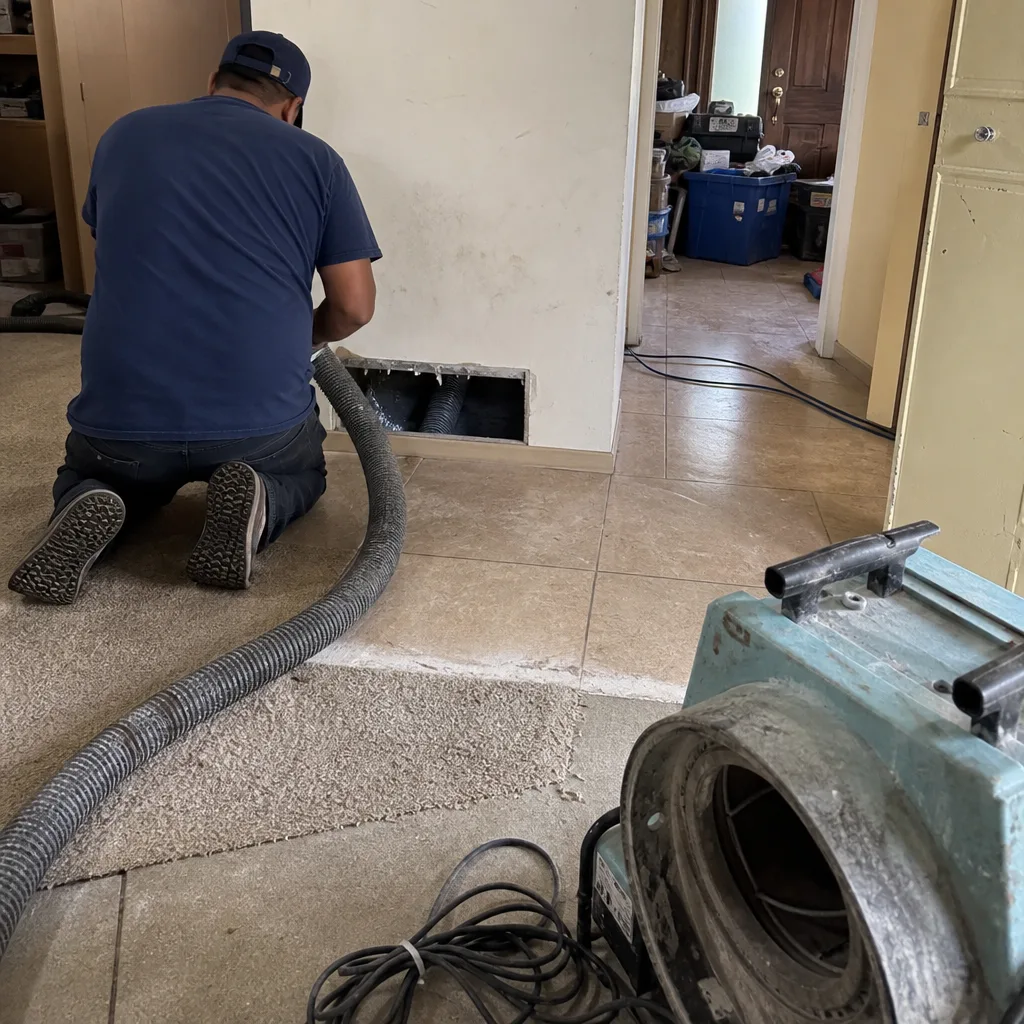 Before
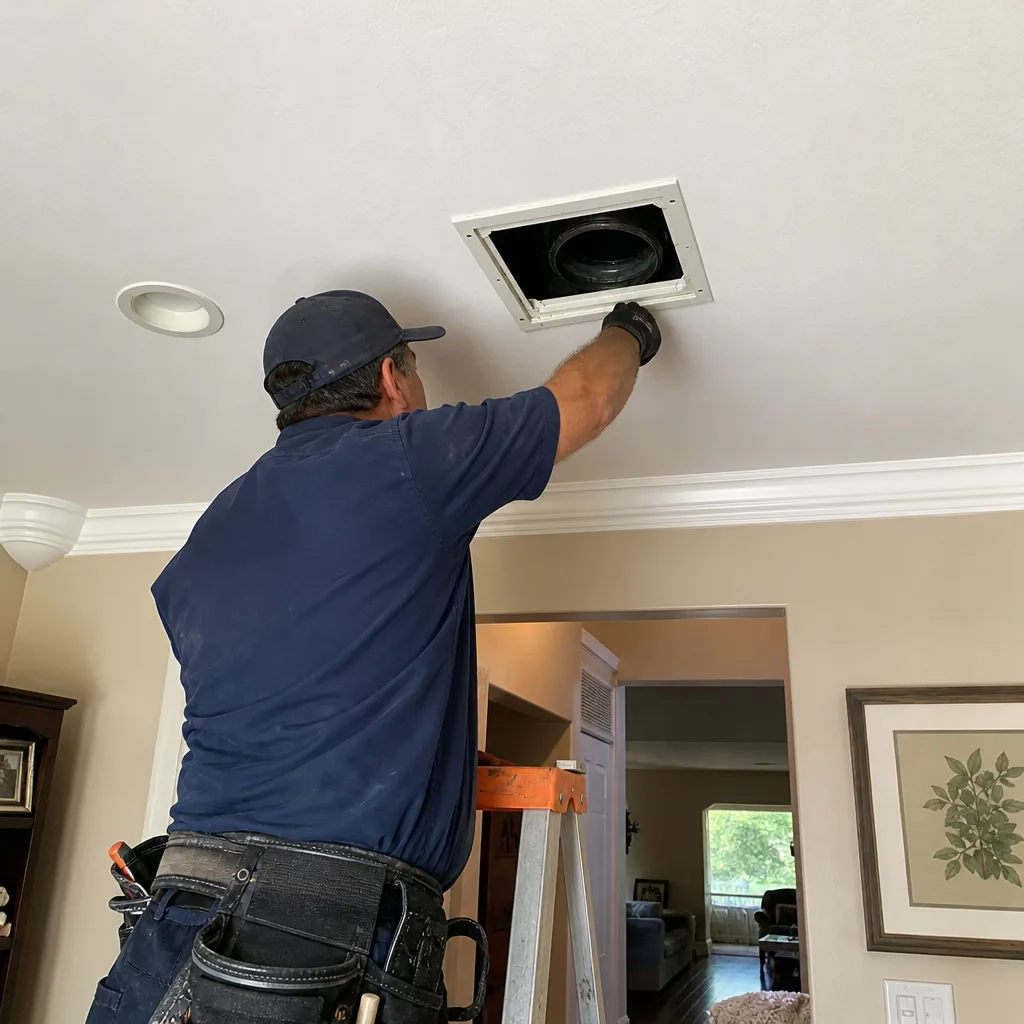 After
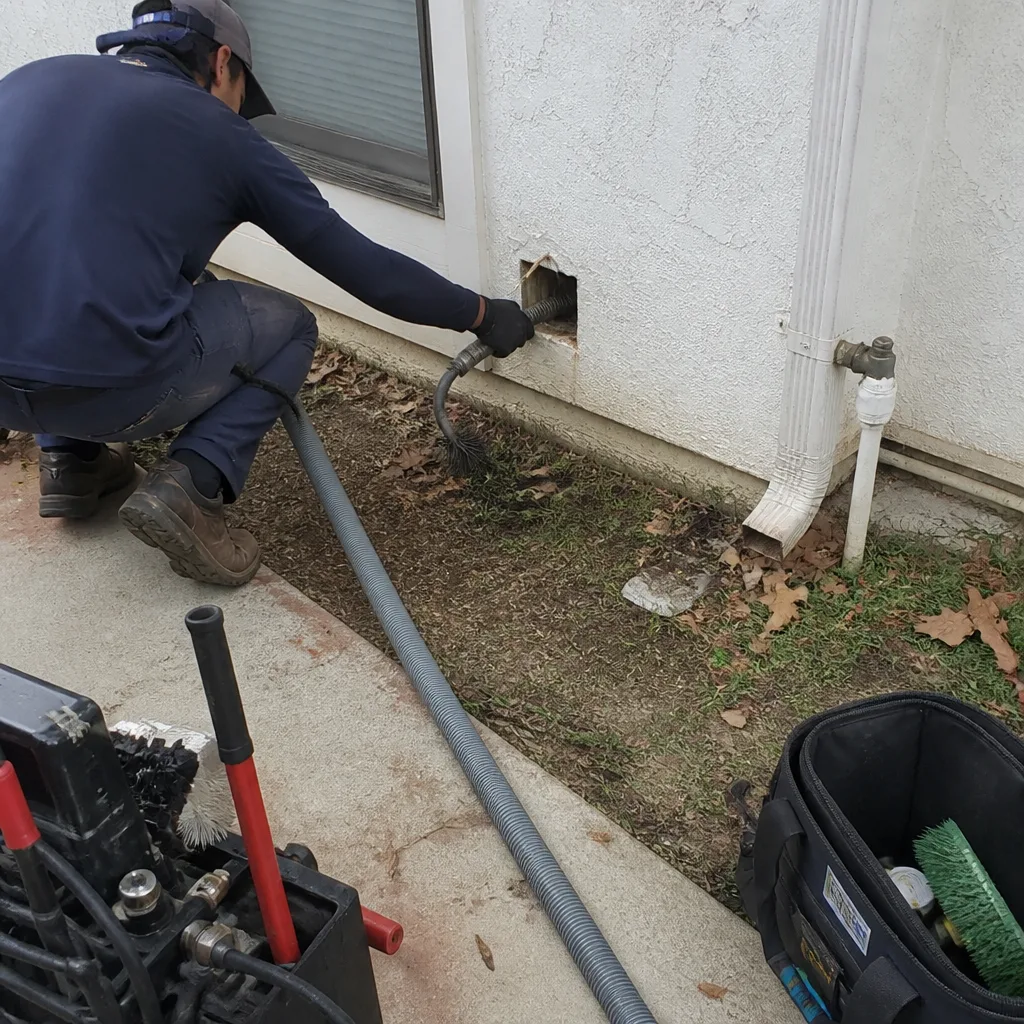 Before
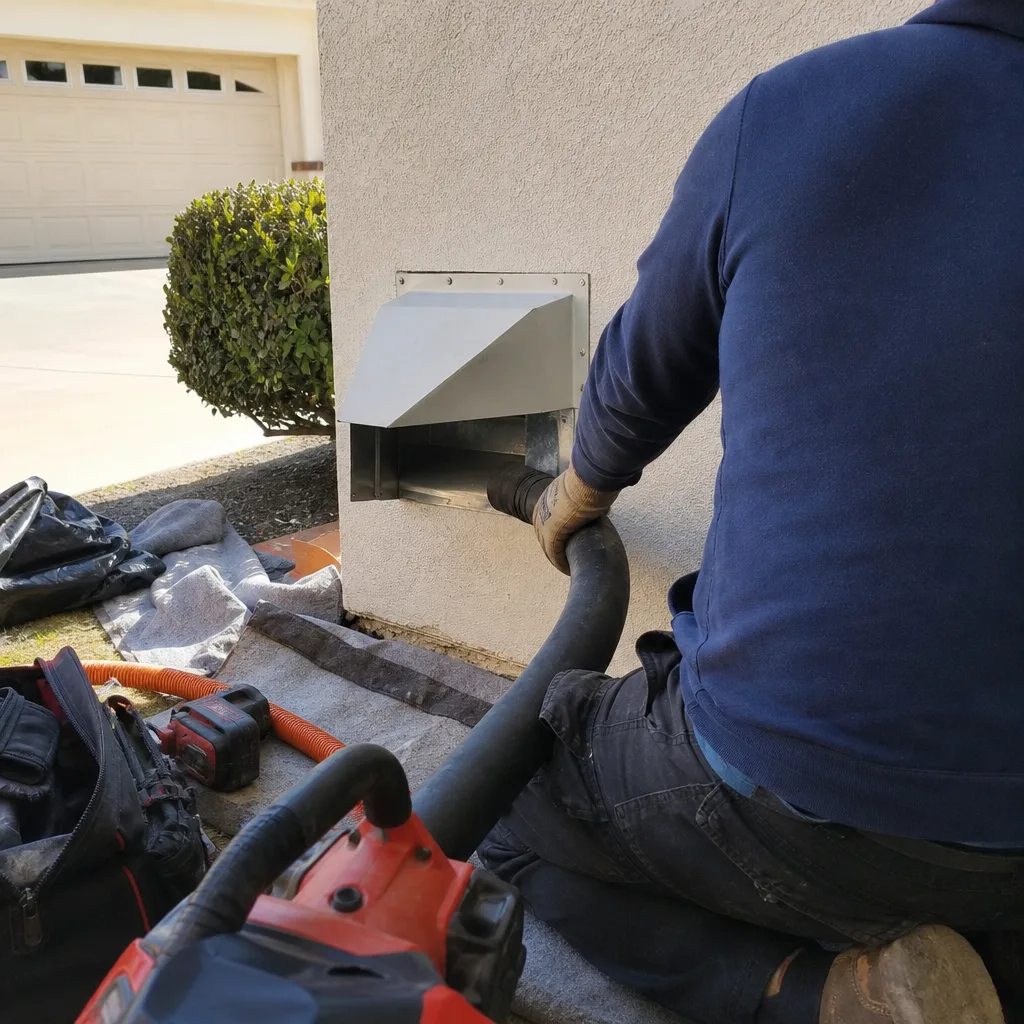 After
 Before
 After