
Last updated November 2, 2026
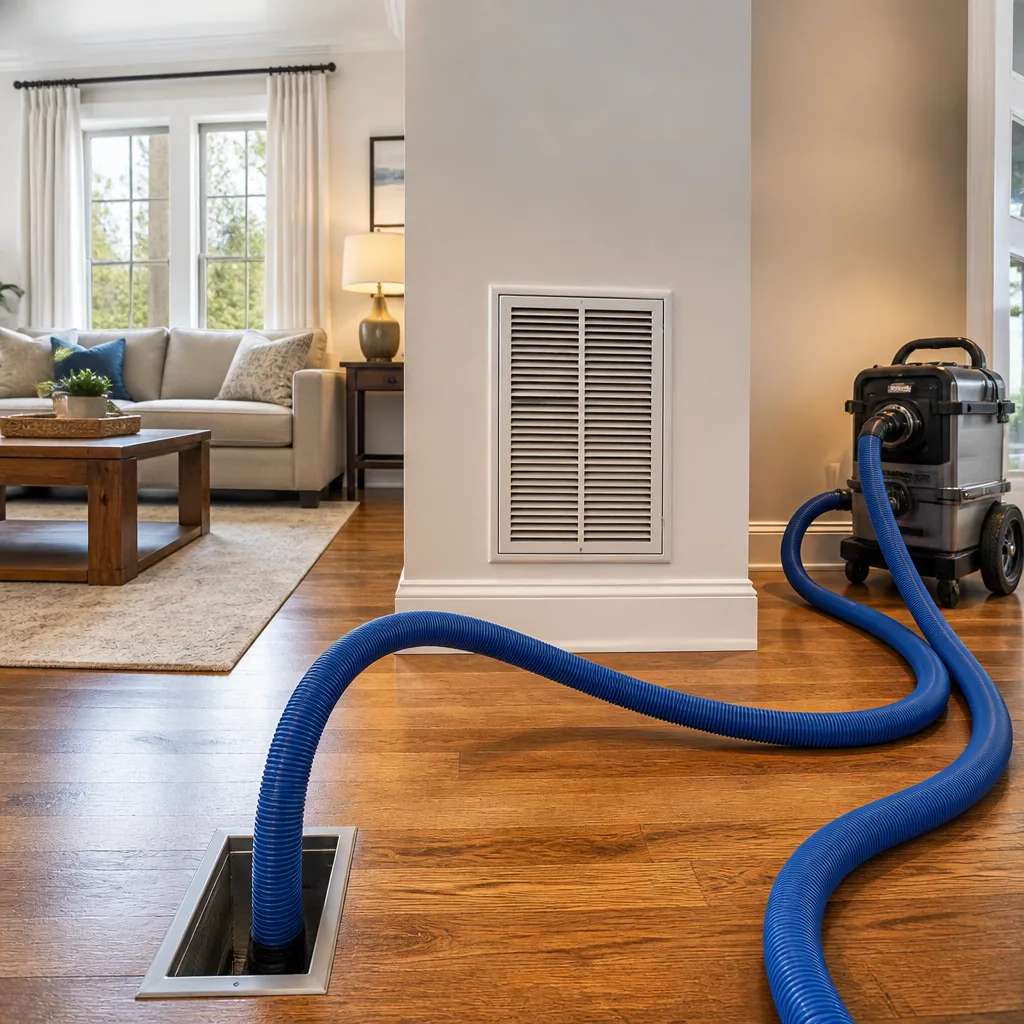 Whole-home duct cleaning
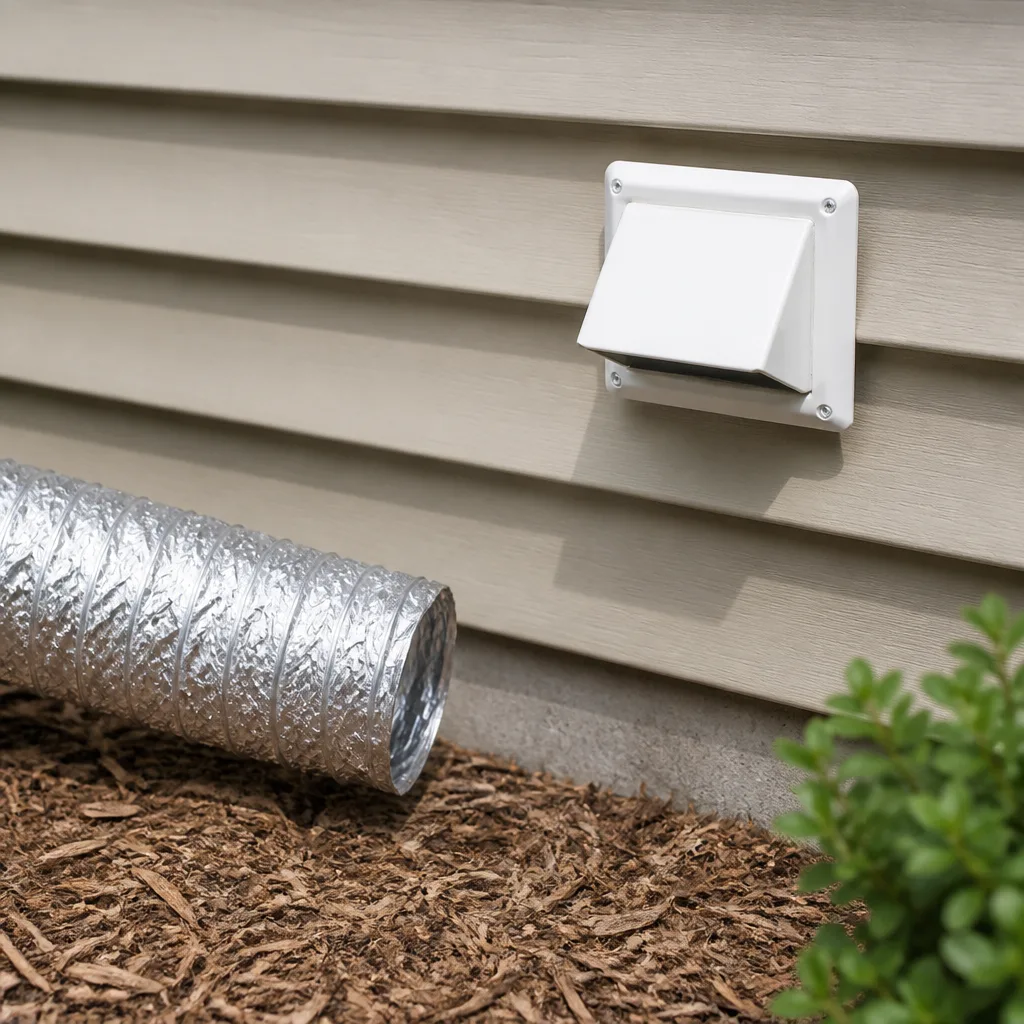 Dryer vent cleaning
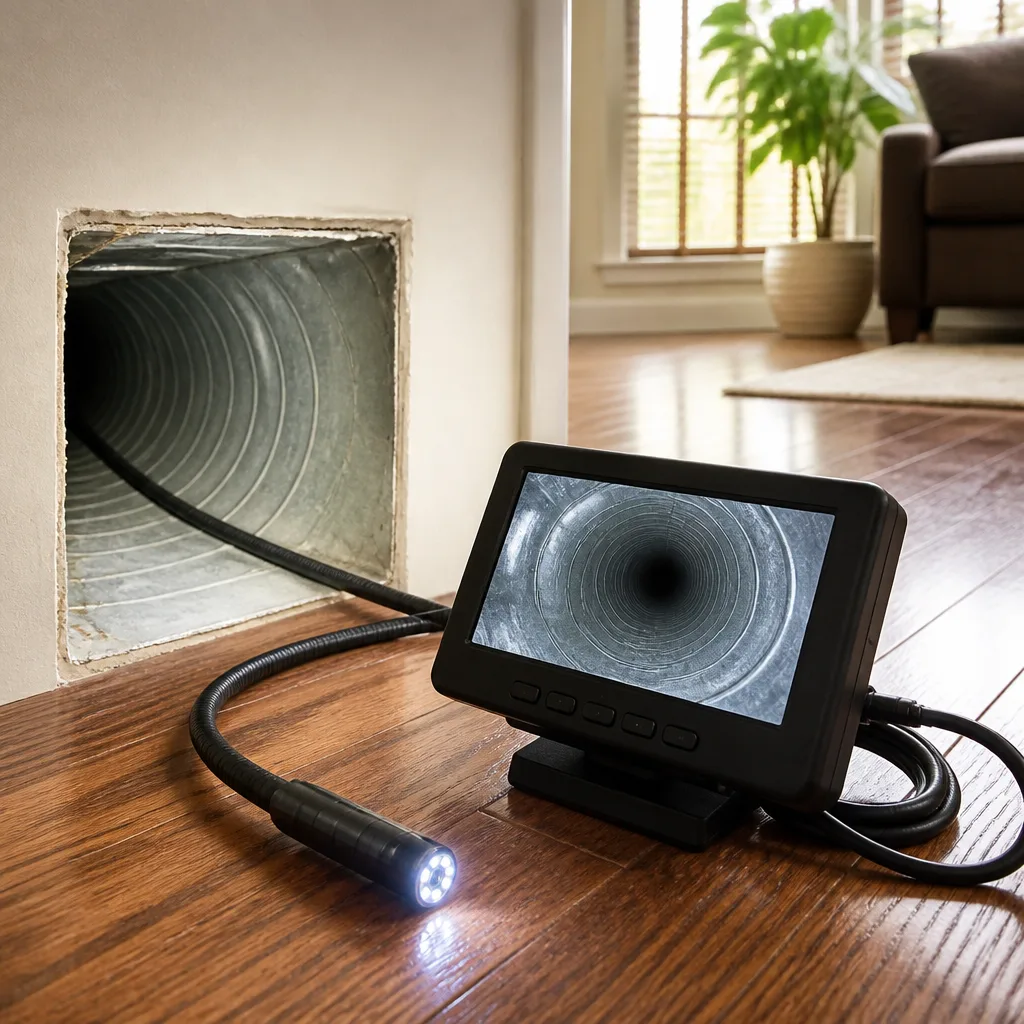 Camera inspection
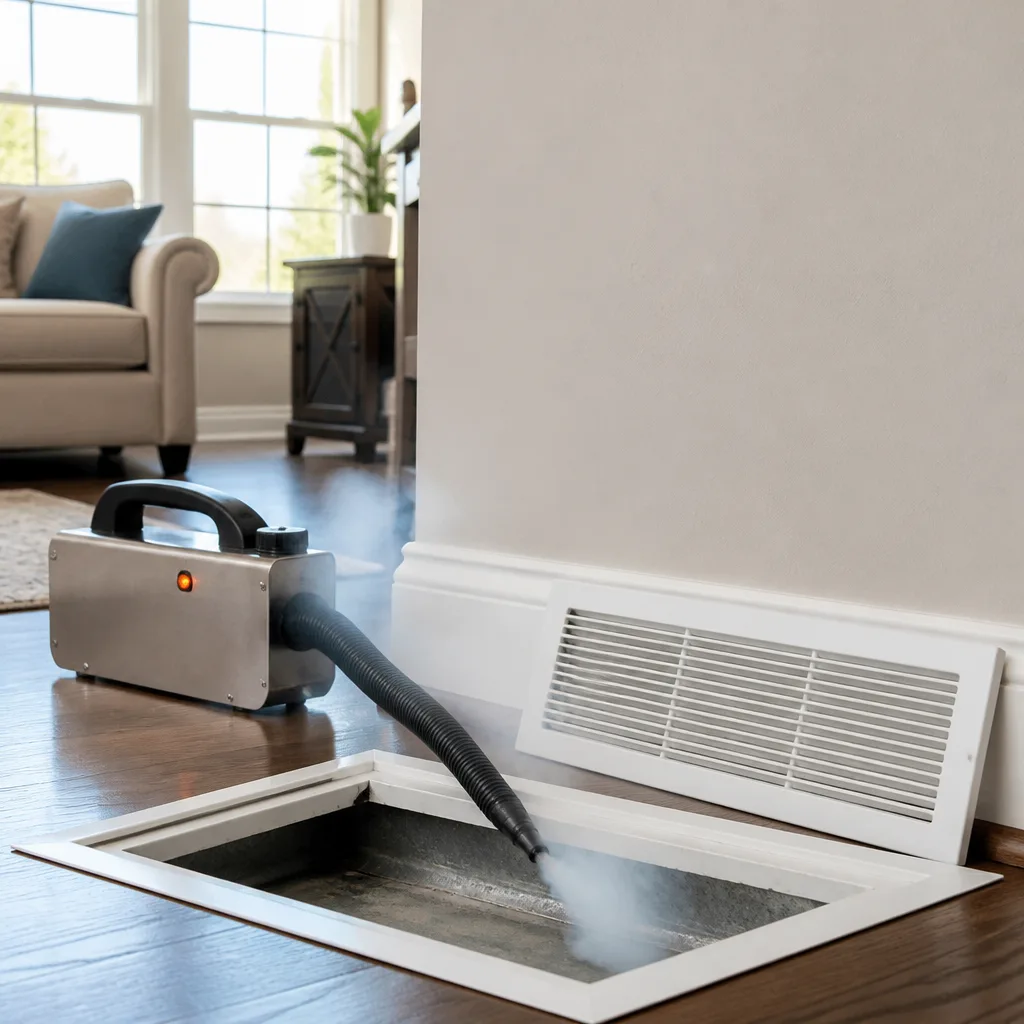 Sanitizing & deodorizing
Whole-system duct and dryer vent check with before-and-after photos - you see exactly what came out of your vents
That "$99 whole-house special" is a bait ad - the real number appears once they are in your hallway, or the "clean" is a shop-vac at the register. We photograph the inside of your ducts before and after instead.
How to Hire an Air Duct Cleaning Contractor in Ventura: A Step-by-Step Guide
The most common air duct scam in California isn’t a fake company. It’s a real one that shows up with a residential shop vac, quotes a low price over the phone, then charges $800 in “mold treatment” upsells once they’re in your attic. Ventura homeowners face this every week, and the bait-and-switch model works because most people have never hired a duct cleaner before and don’t know what separates a legitimate operation from an upsell machine. This guide gives you the specific vetting questions, equipment benchmarks, and quote-reading skills to sort professionals from discount crews, so you hire the right contractor the first time. For our Air Duct Cleaning services, we apply these same standards on every job.
Quick Answer
To hire an air duct cleaning contractor in Ventura, verify their California contractor license, confirm they use truck-mounted or HEPA-filtered negative air equipment (not a shop vac), ask whether they physically agitate duct walls with a contact-cleaning system, and demand a written estimate that includes system square footage and vent counts before work begins. A legitimate contractor will also be a NADCA member, provide before-and-after documentation, and never quote a per-vent teaser price.
Styles & brands we work with
- Whole-home duct cleaning
- Dryer vent cleaning
- Camera inspection
- Sanitizing & deodorizing
Table of Contents
- Why Equipment Matters More Than Price
- The Three Contractor Questions That Reveal Everything
- How to Verify NADCA Membership (and What It Actually Means)
- California Contractor License Lookup: Step-by-Step
- What a Legitimate Estimate Includes
- How to Read a Quote for Hidden Upsell Architecture
- Red Flags That End the Conversation Immediately
- How to Verify the Work Was Actually Done
Why Equipment Matters More Than Price
If you remember one thing from this guide, make it this: the equipment a contractor brings to your Ventura home determines whether the cleaning actually works. Duct cleaning is not a labor-only job. It’s an equipment-dependent process, and the gap between professional-grade tools and consumer-grade alternatives is the single biggest difference between a real cleaning and a surface-level dust shuffle.
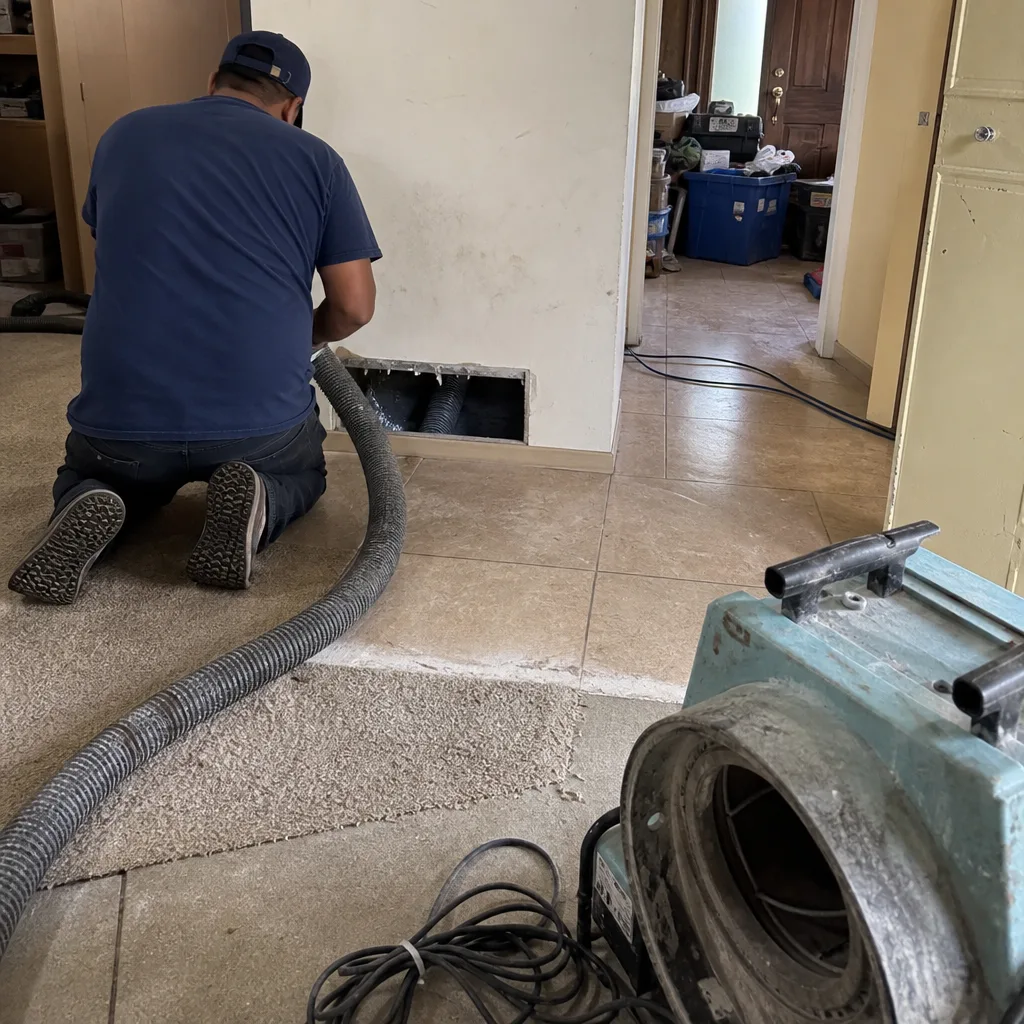
A proper air duct cleaning uses two things working together. First, a negative air machine creates powerful suction that pulls loosened debris out of your ductwork safely, rather than blowing it around your home. Second, an agitation device physically scrubs the duct walls to break loose the caked-on dust, pet dander, and debris that’s adhered over years. Without both components, you’re getting half a job. A shop vac attached to a brush can’t generate the airflow needed to pull debris from a full duct run, and it certainly can’t capture the fine particulate that a HEPA-filtered system traps. In our experience cleaning ducts in Ventura, where coastal humidity can cause dust to mat and adhere to duct walls, without mechanical agitation the debris stays put no matter how much suction is applied.
What to look for in equipment terms:
- Negative air pressure: The vacuum system should pull from the ductwork while simultaneously keeping a slight negative pressure in the system so debris doesn’t escape into the living space.
- HEPA filtration: High-efficiency particulate air filters capture 99.97% of particles down to 0.3 microns. This is the standard specified for mold and remediation projects, and it prevents fine dust from being exhausted back into your Ventura home during cleaning.
- Contact agitation: The cleaning head must physically touch the duct walls. Air washing alone doesn’t remove adhered debris.
- Professional-grade vacuum power: Truck-mounted units or industrial portable HEPA vacuums rated for commercial use. A residential shop vac cannot move enough air to clean a full duct system.
We run Rotobrush contact-cleaning systems paired with Nikro HEPA vacuums for residential jobs in Ventura. These are the same tools specified for commercial and industrial IAQ projects, because the physics of dust extraction don’t change when the building is a house instead of an office. Any contractor worth hiring should be able to name their equipment brands without hesitation. If they can’t, or if they describe their process vaguely as “powerful vacuuming,” you’re almost certainly dealing with a shop-vac operation.
The Three Contractor Questions That Reveal Everything
Before you schedule anything, call the contractor and ask these three questions. You’ll know within ninety seconds whether they’re legitimate, and their answers tell you more than any online review. These questions work because they test for operational specifics that discount crews can’t fake.
Question 1: “What type of vacuum system do you use, and is it HEPA-filtered?”
A professional contractor answers immediately with a brand name and filtration standard. They’ll say something like “We use a Nikro HEPA vacuum rated for remediation work” or “a truck-mounted negative air machine with HEPA filtration.” They know their equipment because they invested in it and maintain it. A discount crew will say “a really powerful vacuum” or “industrial-strength equipment” without naming anything. Vagueness here is a signal. If the answer doesn’t include HEPA filtration, end the call.
Question 2: “How do you physically agitate the debris off the duct walls?”
The correct answer references contact cleaning. You want to hear about rotating brushes, air whips that extend into the ducts, or a contact-cleaning system that scrubs while the vacuum extracts. If the contractor says they “blow air through the system” or “use high-pressure air,” that’s a red flag. Compressed air blowing into your ducts without a proper negative air setup just relocates dust into your living space. If they mention “fogging” or “sanitizing” as their primary cleaning method, that’s another warning sign. Sanitizing is a supplementary step, not a cleaning method.
Question 3: “How do you access the ductwork, and what access points do you create?”
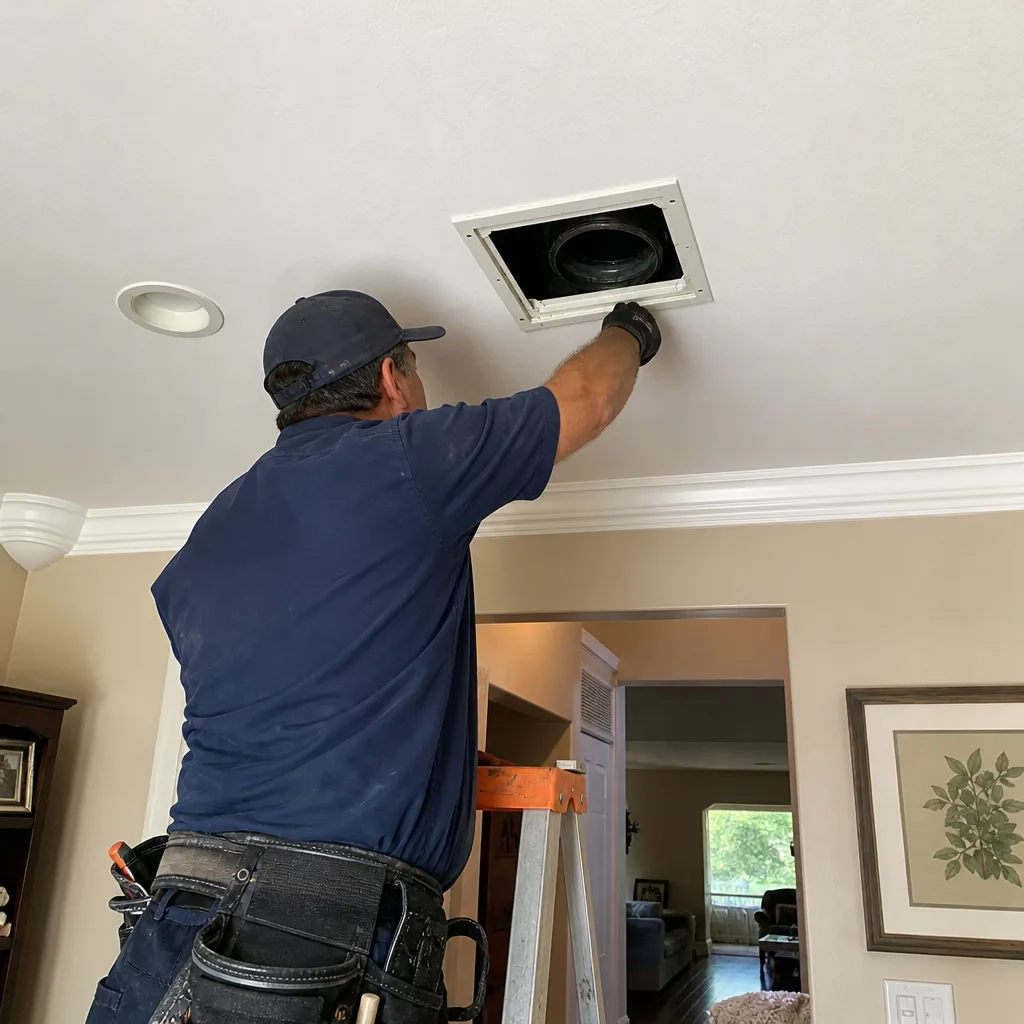
A real contractor talks about cutting access holes at strategic points, sealing them properly after use, and accessing the system through the plenum, supply registers, and return drops. They’ll describe the process of connecting their vacuum at one access point while agitating from another. This demonstrates they understand airflow dynamics and system anatomy. A discount operation typically works only through the floor registers, which means they physically cannot reach the trunk lines and main returns where most debris accumulates. If the answer is “through your vents,” ask how they clean the main trunk line. The silence that follows will tell you everything.
Note: We use Rotobrush contact-cleaning systems and Nikro HEPA vacuums on every residential job in Ventura. We name our equipment because we want you to verify it. Any contractor who won’t answer these three questions before your job isn’t going to answer harder questions after it.
How to Verify NADCA Membership (and What It Actually Means)
NADCA is the National Air Duct Cleaners Association, and it’s the only meaningful national standard for this industry. But here’s what most homeowners don’t understand: NADCA membership is not a performance guarantee, and not all NADCA members are equally qualified. The membership means the contractor has committed to following NADCA’s standards for cleaning methodology and ethics. It doesn’t mean NADCA has inspected their work or verified their equipment.
That said, NADCA membership still matters, and you should verify it. Here’s why: the bait-and-switch operators dominating online ads in the Ventura market rarely invest in NADCA membership because it requires ongoing continuing education, adherence to a published standard, and accountability when complaints are filed. The cost and commitment filter out the worst operators. A contractor who maintains NADCA membership is at minimum serious enough about duct cleaning to join an industry association and learn the proper methodology, rather than buying a shop vac and running Facebook ads.
How to verify membership properly:
- Ask for their NADCA member number. Every member has one. If they hesitate or say “we’re certified” without a number, verify directly.
- Check the NADCA directory. Go to NADCA.com and use the “Find a Professional” search tool. Enter the company name. Membership should be listed as active.
- Confirm the listed services. NADCA members list their specialties. Make sure “air duct cleaning” is listed, not just “HVAC cleaning” or “dryer vent cleaning.”
- Ask about their most recent NADCA training. Members complete continuing education. If they can’t tell you when they last completed a NADCA course or seminar, that’s a weak signal.
What NADCA membership actually obligates a contractor to do: clean ductwork to the ACR (Assessment, Cleaning, and Restoration) standard, use source-removal methods (not just blow-and-go), provide written documentation of work performed, and adhere to ethical selling practices. That last point matters in Ventura, where high-pressure mold upsells are common. A NADCA member who runs a $49 coupon special and then tries to sell you $1,200 in “mold remediation” is violating the association’s ethics code, and you can report them to NADCA for review.
The bottom line: NADCA membership is a floor, not a ceiling. It tells you the contractor meets a minimum standard of competence and ethics. You still need to verify equipment, ask the right questions, and read the quote carefully.
California Contractor License Lookup: Step-by-Step
In California, air duct cleaning contractors are regulated by the Contractors State License Board (CSLB). This is non-negotiable: you should never hire an unlicensed crew for duct cleaning, and here’s the liability reality that most homeowners don’t consider. If an unlicensed worker is injured in your Ventura home, your homeowner’s insurance may deny the liability claim because the work was performed by an unlicensed individual. If the crew damages your ductwork or causes property damage, you have no CSLB recovery fund to pursue. An unlicensed operator is a personal liability you’re assuming without realizing it.
Here’s how to verify a California contractor license:
- Go to the CSLB website at cslb.ca.gov and click “Check a License.”
- Enter the company name or license number. Ask the contractor for their license number during your first call. If they won’t provide it, that’s the end of the conversation.
- Verify the license status is “Active.” An expired or suspended license is not a license.
- Check the license classification. Air duct cleaning falls under the C-20 (Warm-Air Heating, Ventilating and Air-Conditioning) classification or possibly the D-43 (Sanitation System) classification in some cases. A C-36 (plumbing) or C-10 (electrical) license is not the right classification for duct work.
- Check for workers’ compensation insurance. The CSLB listing will show whether the contractor carries workers’ comp. If they have employees and don’t carry workers’ comp, that’s a serious problem for you.
- Check the bond status. Active contractors in California must maintain a contractor’s bond. If the bond is cancelled, the license is suspended.
- Note the license issue date. A contractor with a license issued three months ago may be perfectly legitimate, but a contractor with a decade-old license has survived market forces and CSLB oversight. Neither is disqualifying, but the history matters when you’re making your decision.
Ventura County has specific considerations. The CSLB actively investigates unlicensed contracting in Southern California, and Ventura is within the CSLB’s Statewide Investigative Fraud Team (SWIFT) enforcement zone. That doesn’t mean unlicensed operators don’t exist here. They do, and they advertise heavily on social media. The enforcement pressure just means they cycle through company names quickly, which is another reason to verify everything before hiring.
What a Legitimate Estimate Includes
A real duct cleaning estimate should arrive before the crew does, and it should be specific enough that you can compare it against another quote line by line. If a contractor gives you a price over the phone without asking about your system, that’s not an estimate; it’s a marketing hook designed to get a technician into your home. Here’s what a legitimate written estimate from a Ventura duct cleaning contractor should include:
- System square footage. The estimate should list the approximate square footage of ductwork being cleaned, based on your home’s square footage and system design. A 1,200-square-foot condo has a fraction of the ductwork of a 3,500-square-foot two-story home.
- Number of supply and return vents. Count every vent in your home before you get quotes, so you can verify the contractor’s count matches reality. If a quote lists 8 vents and your home has 14, the price may be a teaser that gets corrected once the technician arrives.
- Access point locations. The estimate should note where the contractor plans to create access points: the main plenum, the return drop, specific branch runs if necessary. This shows they’ve thought about your specific system, not just applied a template.
- Cleaning methodology. The estimate should state the method: source removal using negative air pressure and mechanical agitation. If the estimate says “air sweep” or “blow out,” walk away.
- Inclusions and exclusions. Does the price include cleaning the main trunk line, all branches, the return, the plenum, and the fan housing? What’s excluded? Some contractors exclude the main return or the fan, then upsell those as “additional services.”
- Filtration statement. The estimate should state whether HEPA filtration is used. If it doesn’t mention it, ask.
- Duration. A full residential duct cleaning typically takes 3 to 5 hours for a standard home. If the estimate implies it’s a one-hour job, the contractor is not doing source removal.
- Documentation commitment. The estimate should state that before-and-after photos will be provided. If a contractor won’t commit to this in writing, you’re hiring a crew that doesn’t want you to see the result.
When you receive estimates from multiple Ventura contractors, look at what’s included, not just the bottom line. See our Air Duct Cleaning Cost Breakdown: The Ventura Homeowner’s Reference for 2026 for line-by-line guidance. A quote that’s $400 lower but excludes the main return and the fan housing is not cheaper. It’s incomplete, and you’ll pay for those exclusions once the crew is in your attic with a camera showing you “problems” that were always going to be there.
How to Read a Quote for Hidden Upsell Architecture
The $99 duct cleaning special is not a price. It’s a door opener. The economics don’t work: a legitimate crew of two technicians with commercial-grade equipment cannot clean a residential duct system properly for $99 without losing money on every job. So the $99 service is designed to get a technician inside your home, where the real sale happens. Understanding this architecture is how you protect yourself.
Here’s how to read a quote for the built-in upsell path:
- Line items with vague descriptions. “Additional sanitizing as needed” or “mold treatment if recommended” are pre-authorized upsells waiting to happen. A legitimate estimate is specific. Either the service is included or it’s not. Vague contingency language means the technician has been trained to find the “problem” during the visit.
- The per-vent price structure. Quotes that list a base price plus a per-vent charge are structured for confusion. You can’t easily calculate your total, and the technician has room to “find” additional vents. A legitimate quote prices the system as a whole.
- Camera inspection that’s “free” with the cleaning. A free camera inspection isn’t free. It’s a lead generation tool for upsells. A legitimate contractor uses a camera to verify work after cleaning, not to generate add-on sales during the visit.
- Mold testing “available on request.” If the technician finds “mold” and offers to test it for a fee, understand that legitimate mold testing requires lab analysis and takes days. Instant mold test kits are not reliable. A real contractor will tell you if they see something that warrants professional mold assessment, and they won’t be selling you a remediation package from the back of the van.
- Antimicrobial fogging as an add-on. Fogging is a legitimate supplementary treatment in certain situations, but it’s not a substitute for cleaning. If the quote implies the fogging does the cleaning, that’s a misrepresentation. If the fogging is priced at $500+ and described as “hospital-grade,” the markup is doing the talking.
- Time-pressure language. “This price is only good today” or “we can lock this in if you sign now” are pressure tactics. A legitimate contractor gives you time to read the quote and think it through.
In Ventura, the upsell culture is well-documented among discount operators because the market is competitive and the customer acquisition cost for cheap online leads creates pressure to maximize revenue per visit. A contractor who quotes one flat price per system, agreed before work starts, is signaling that they make their money on the cleaning itself, not on selling you add-ons from your attic.
Red Flags That End the Conversation Immediately
Some contractors disqualify themselves in the first five minutes. Here are the signals that should end your conversation immediately, whether you’re in Ventura, Oxnard, or Camarillo:
- No contractor’s license or won’t provide the number. This is not a gray area. Unlicensed work is illegal in California, full stop.
- No workers’ compensation insurance. If the crew gets hurt in your home, you’re exposed. Verify on the CSLB website, not from the contractor’s word.
- Quotes a price before asking about your home. A $99 “whole house special” quoted before anyone has asked about system size, number of vents, or access is a marketing hook, not an estimate.
- Can’t name their equipment. If a contractor can’t tell you what brand of vacuum or agitation system they use, they may not have invested in any. What they can tell you is how their “certified technicians” are “trained.” Equipment is the proof.
- Won’t commit to before-and-after documentation. If the contractor avoids committing to photos or verification in writing, ask yourself what they’re planning to do that they don’t want documented.
- Offers mold testing or remediation without lab credentials. Mold assessment is a specialized field. A duct cleaner who diagnoses mold from a photo and sells remediation is operating outside their expertise, and the “mold” is more likely dust accumulation.
- Pressure to sign immediately. A one-day-only price that disappears if you don’t commit is designed to prevent you from comparing quotes. Legitimate contractors don’t need time pressure to close business.
How to Verify the Work Was Actually Done
The duct cleaning industry has an accountability problem because the work product is hidden inside your walls. The homeowner can’t see the inside of the ductwork without a camera, which creates an incentive for unscrupulous operators to clean the visible registers and skip the trunk lines entirely. You pay for a full system cleaning and get a cosmetic wipe-down. Here’s how to make sure you got what you paid for:
- Demand before-and-after photos from inside the ducts. A legitimate contractor runs a camera through the trunk line, the returns, and at least a representative sample of branch runs before and after cleaning. You should see the same duct section in both photos. If the “after” photos are of different locations than the “before” photos, ask why.
- Check the main trunk line access. The contractor should access and clean the main trunk, not just the visible register openings. After the job, ask where the main trunk was accessed and how the access point was sealed. A proper contractor will show you the sealed access point.
- Inspect the return drop. The return side of the system carries the most dust because it’s pulling air from the living space. The return should be visibly cleaner after the job. If you can reach the return grille, check it with a flashlight.
- Verify the blower fan was cleaned. A full-system cleaning includes the fan housing. The fan is the component that moves air through the system, and if it’s coated in dust, it recontaminates the entire system quickly. Ask whether the fan was removed and cleaned.
- Review the documentation. After the job, you should receive a written report detailing what was cleaned, how it was cleaned, and what was found. Photos should be included. If the contractor says “we’ll email that later” and never does, follow up. If the documentation never arrives, you have your answer about the quality of the work.
At Air Duct Cleaning Ventura, we document every job with interior duct photography because we want you to see what was done. The work product lives inside your walls, and if a contractor can’t show it to you, as far as you’re concerned, it didn’t happen. For a more detailed overview of what a proper cleaning includes, see our Air Duct Cleaning in Ventura page.
Common Mistakes to Avoid
- Hiring based on the lowest price. The $99 special exists for one reason: to get a technician into your home where the upsell machinery starts. You will not get a $99 duct cleaning. You will get a $99 door opener and a $700 invoice.
- Not verifying the license. It takes three minutes on the CSLB website to confirm a contractor is licensed with active status and workers’ comp. Skipping this step means accepting personal liability for whatever happens in your home.
- Assuming NADCA membership guarantees quality. NADCA membership filters out the worst operators, but it’s not a performance inspection. You still need to verify equipment, methodology, and documentation standards yourself.
- Accepting verbal estimates. If it’s not written, it doesn’t exist. A verbal estimate is a blank check for the technician to “find” additional work once they’re in the attic.
- Not asking about equipment before scheduling. The equipment question is the fastest way to separate commercial-grade operators from shop-vac crews. If you hire without asking, you’ll find out what they brought when they arrive.
- Trusting “mold” diagnoses from a duct cleaner. Dust and mold look different to professionals, but they look the same to a technician with an upsell quota. If mold is suspected, get a certified mold inspector, not a duct cleaner with a fogging machine.
- Not checking the return side of the system. Some operators clean supply registers and skip the return, which is where the dust concentrates. Ask specifically how the main return was cleaned.
See the difference
 Before
 After
 Before
 After
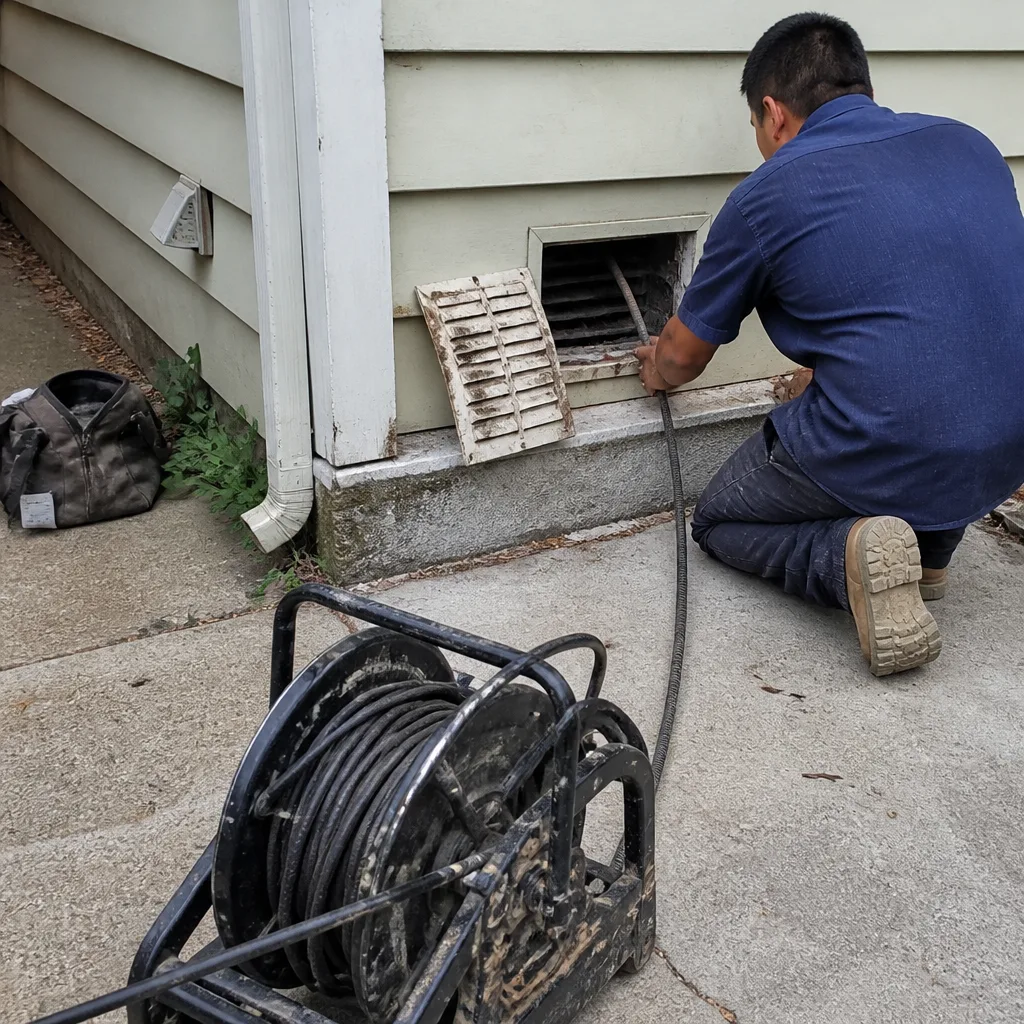 Before
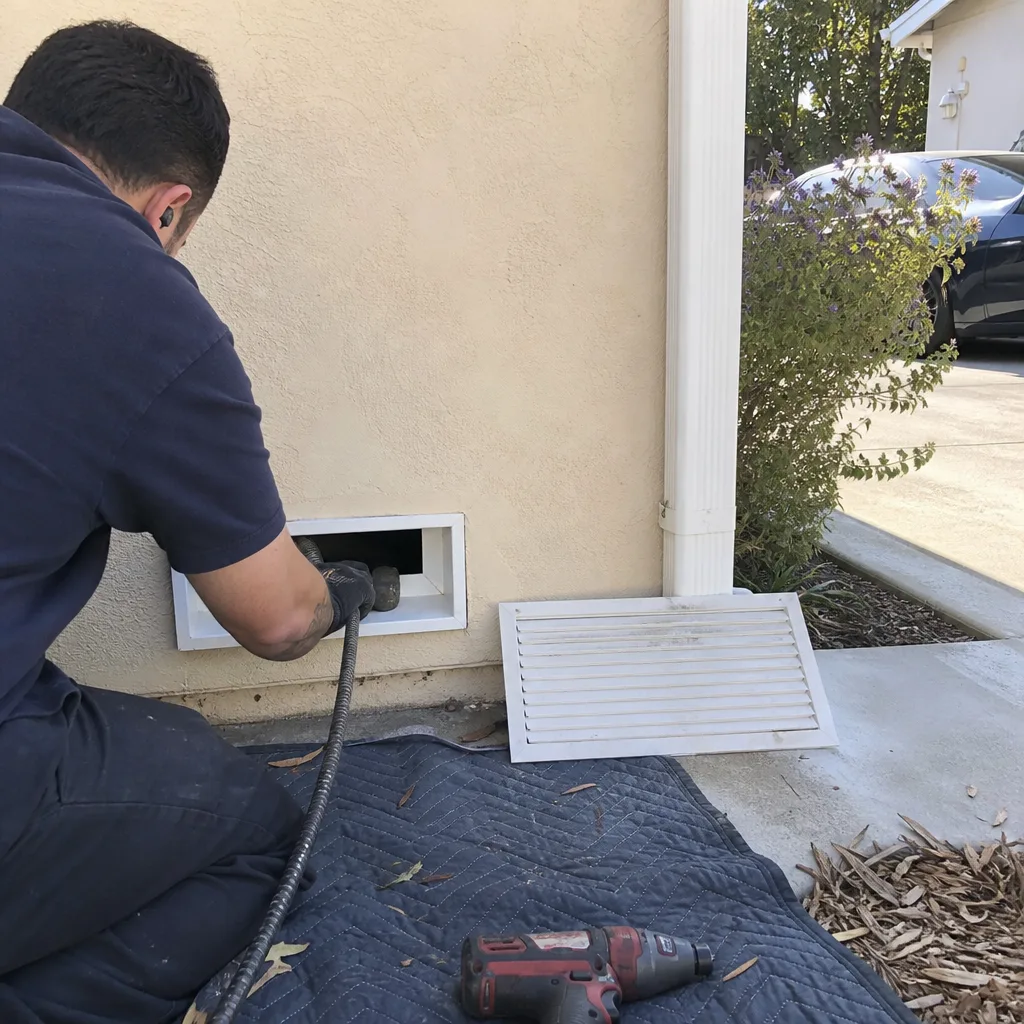 After
When to Call a Professional
If you’ve lived in your Ventura home for more than three years and have never had the ducts cleaned, you’re overdue. If you’ve noticed dust accumulating on surfaces within days of cleaning, if airflow from your registers feels weak, if rooms heat and cool unevenly, or if there’s a musty smell when the system runs, those are all signals that the ductwork needs a professional assessment. If you’ve recently completed a remodel, your ducts likely collected construction dust and debris that needs extraction, not just a filter change. If anyone in your home deals with allergies, asthma, or respiratory conditions, the dust, pollen, and pet dander circulating through a dirty system makes those conditions worse. Air Duct Cleaning Ventura offers free estimates in Ventura. Call (855) 507-7508 to schedule yours, and we’ll assess your system, document your ductwork, and give you a written estimate with specifics, not a phone price.
Frequently Asked Questions
Residential air duct cleaning in Ventura typically ranges from $400 to $900 for a standard single-family home, depending on system size, number of vents, and access complexity. A two-story home with multiple HVAC zones will run higher. If a quote comes in at $99, you are not getting a duct cleaning. You are getting a sales visit. For an exact quote on your system, call (855) 507-7508 for a free estimate. For more on what a proper cleaning includes, see our Air Duct Cleaning in Ventura page.
Cheaper quotes are cheaper because the operator is not doing the same amount of work. They’re using a residential shop vac instead of a negative air machine with HEPA filtration, skipping the main trunk line, or planning to make up the difference through upsells. The $99 model exists to get a technician into your home, after which the real selling starts. A legitimate contractor quotes one price for the whole system, agreed before work starts.
You verify with interior duct photography. A legitimate contractor will provide before-and-after photos from inside the ductwork, showing the same locations before and after cleaning. You should also receive a written report detailing what was cleaned and how. If a contractor won’t commit to documentation in the estimate, hire someone else.
The NADCA standard recommends cleaning every 3 to 5 years for most homes. Ventura homes near the coast may need more frequent cleaning because ocean air humidity causes dust to mat and adhere inside the ducts. Homes with pets, smokers, recent remodels, or allergy sufferers should lean toward the shorter interval. If you have a Honeywell or Aprilaire filtration system installed, effective filtration can extend the intervals by reducing the particle load entering the ducts in the first place.
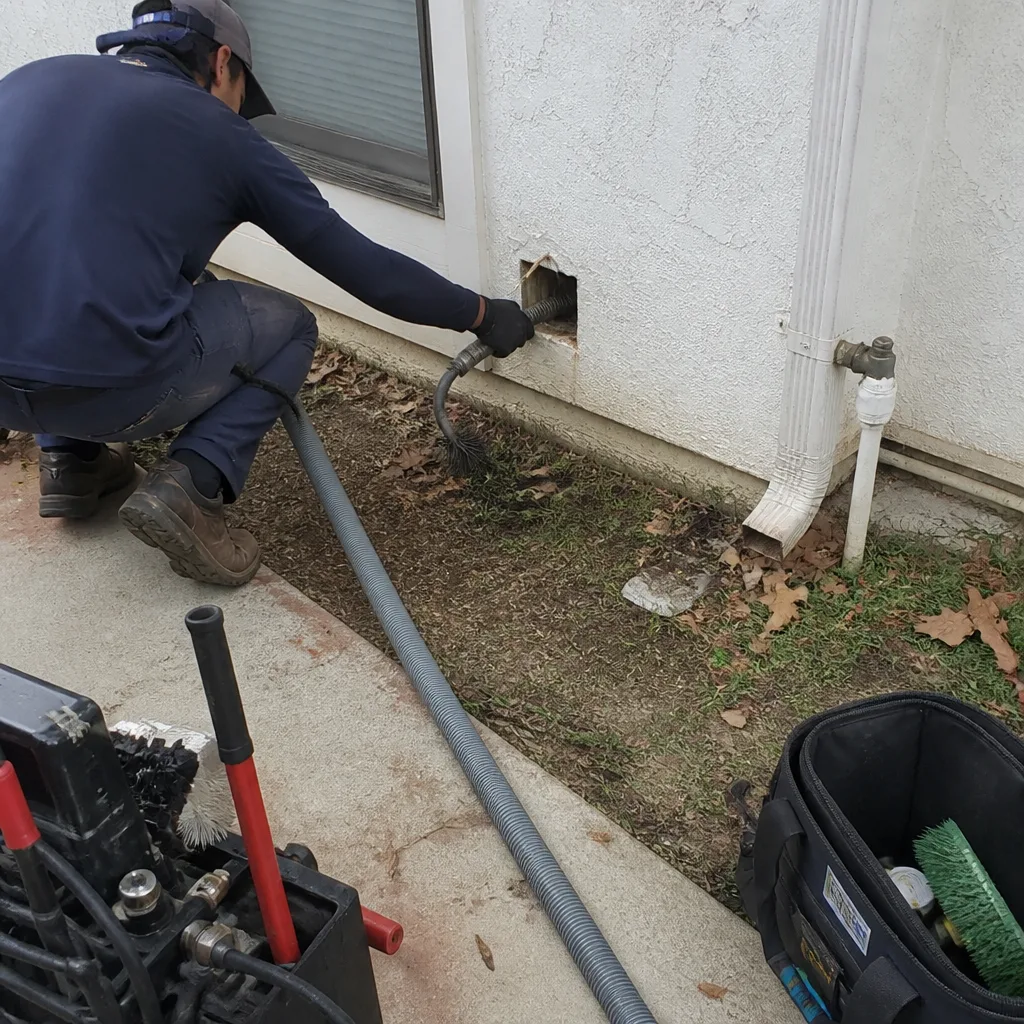
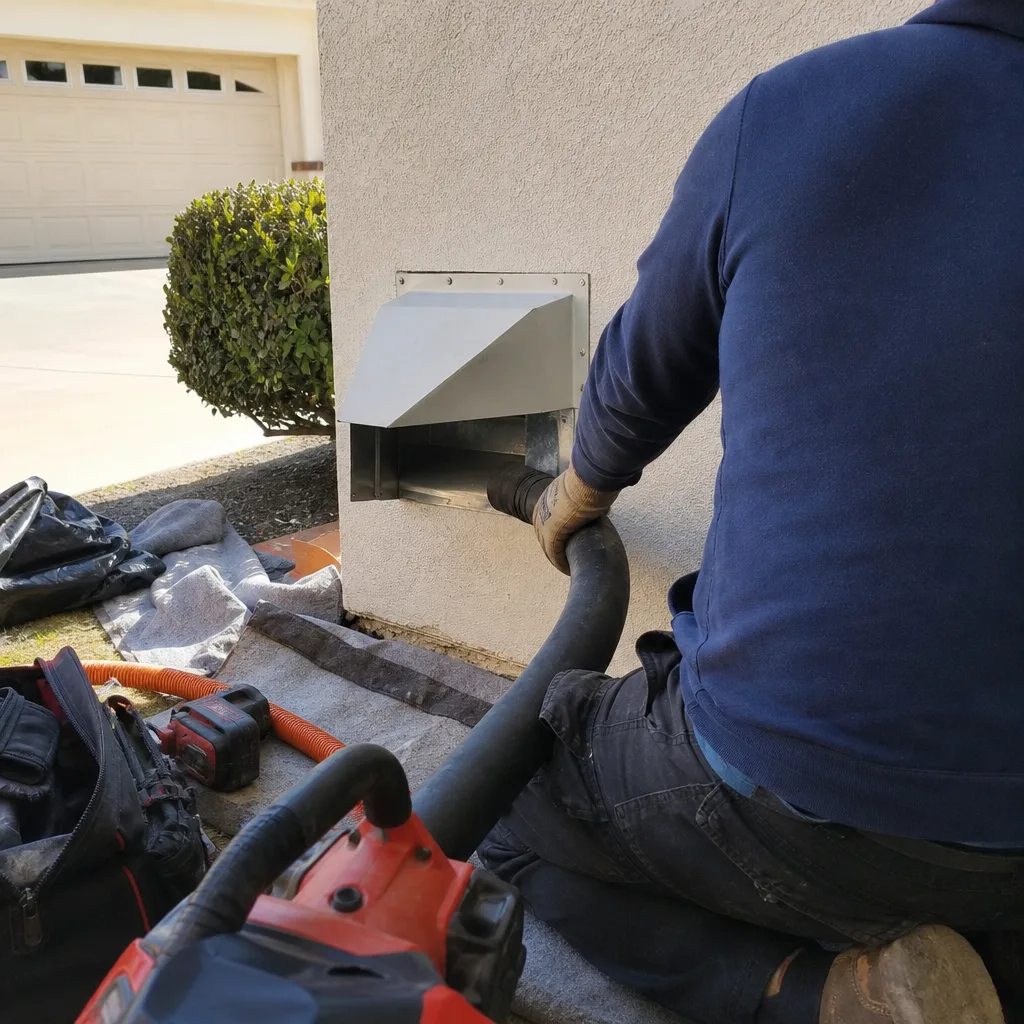
Dryer vent cleaning is not an upsell. It’s a fire-safety service. The NFPA documents thousands of dryer fires annually in the U.S., and clogged vents are the leading cause. If your dryer takes longer than 40 minutes to dry a load, or if the exterior vent flap doesn’t open fully during operation, the vent is restricted. For more on this service, see our Dryer Vent Cleaning in Ventura page.
You cannot effectively clean your own ductwork with a shop vac. The vacuum can’t reach more than a few feet into a duct run, and it lacks the negative air pressure and HEPA filtration to capture the fine particulate properly. What you’ll do is pull some surface dust from the first few feet of duct and leave the rest undisturbed. Professional duct cleaning is an equipment-dependent job, not a labor-only task, and the equipment is the cost difference.
The Bottom Line
Hiring an air duct cleaning contractor in Ventura is a verification process, not a price-shopping exercise. Verify the license on the CSLB website. Verify NADCA membership. Ask the equipment questions and require specific answers. Read the written estimate for what’s included and what’s left vague. Demand before-and-after documentation. A legitimate contractor will welcome all of this scrutiny because their work product can be photographed and shown to you. A discount operation will dodge, pressure, and upsell. The choice becomes clear once you know what to look for. For duct cleaning, dryer vent cleaning, or Air Duct Repair in Ventura, our team is here to help. See our Air Duct Cleaning Ventura home page for a full overview, or call (855) 507-7508 for a free estimate.
Written by the team at Air Duct Cleaning Ventura, serving Ventura since 2017. Explore more guides & resources on protecting your home’s air quality.